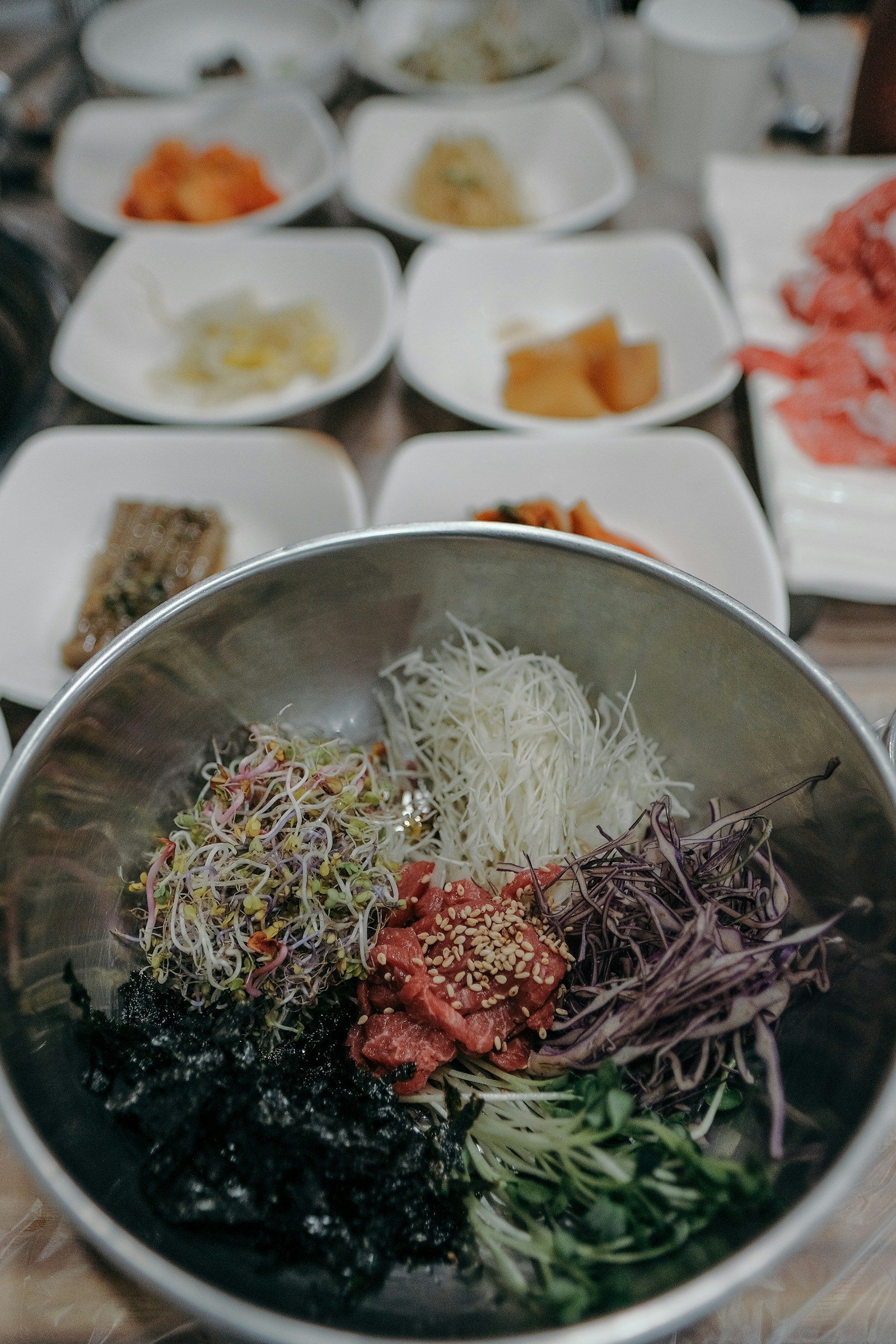
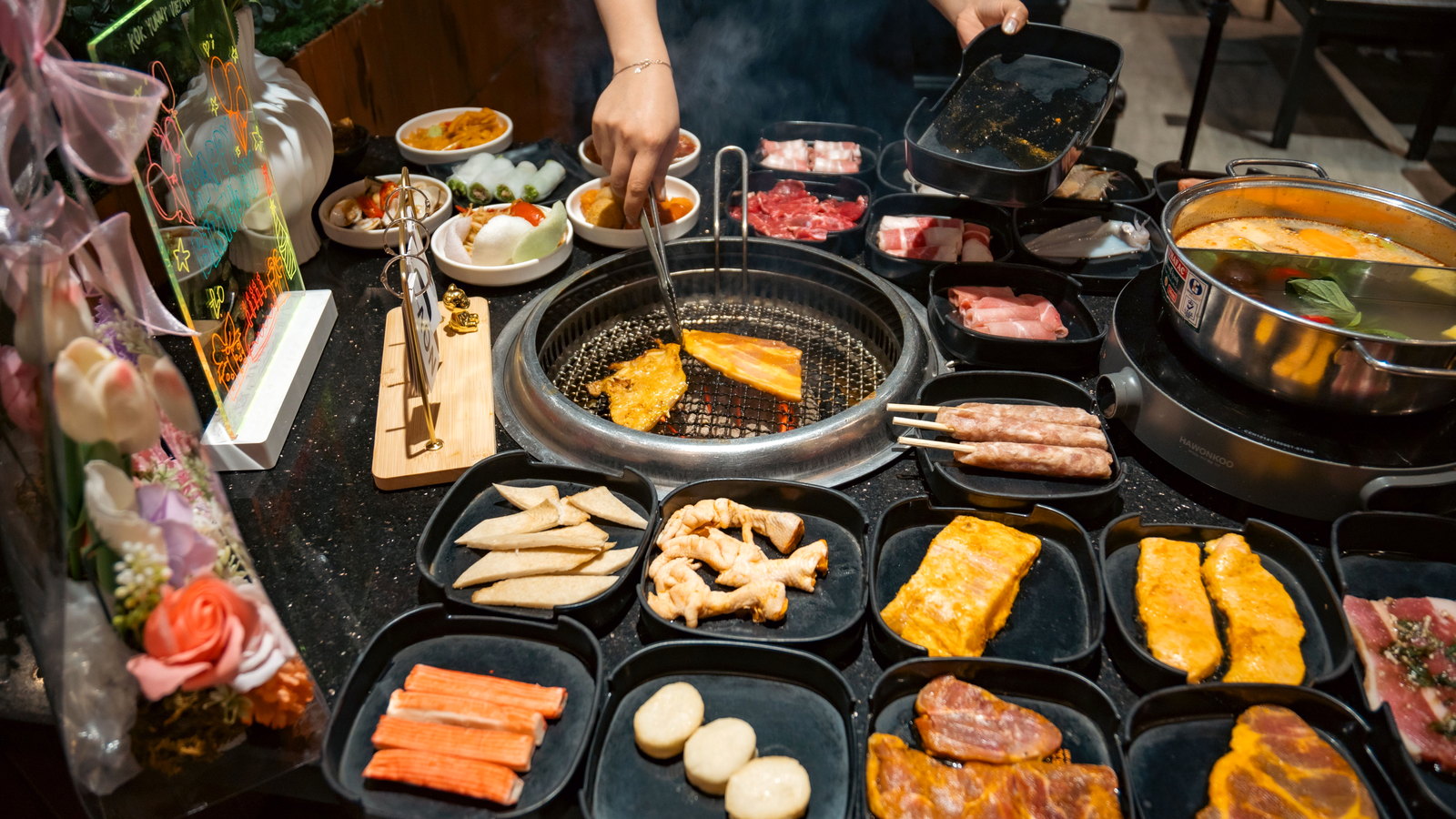
An Asian barbecue evening starts before the first piece of meat touches the grill. The table fills with small bowls: crisp lettuce, fragrant herbs, rice, noodles, kimchi, cucumber, pickled vegetables and several sauces. Then the first marinade hits the hot plate. One person turns a skewer, another builds a lettuce wrap, and soon everyone is comparing which combination tastes best.
That is the attraction. Korean BBQ, Japanese yakiniku, yakitori, satay and Vietnamese grilled dishes are not five names for the same meal. They use different cuts, cooking styles, side dishes and sauces. What they share is the feeling of a long, sociable dinner: people cook, taste, dip and assemble the next bite together.
You do not need a restaurant kitchen. Most ideas work on a normal gas or charcoal barbecue, a plancha, a grill pan or—when the manufacturer explicitly allows indoor tabletop use—an electric grill. Thinly cut ingredients, well-organised bowls and a strict separation between raw and ready-to-eat food matter more than specialist equipment.
Quick guide: Korean BBQ and yakiniku usually involve grilling small portions at the table. Yakitori are primarily chicken skewers. Satay are spice-marinated skewers served with a bold sauce. Vietnamese grilling combines warm grilled food with cool rice noodles, herbs, salad and sweet-sour seasoning.
Korean BBQ, yakiniku, yakitori or satay: what is the difference?
| Style | What goes on the grill? | How is it eaten? | Typical sides |
|---|---|---|---|
| Korean BBQ | Thin marinated beef, pork belly, mushrooms and vegetables | Straight from the grill, often wrapped in lettuce | Ssamjang, kimchi, rice, banchan and sesame-oil dip |
| Yakiniku | Small pieces of meat, mushrooms and vegetables | Grilled in batches at the table, then dipped | Yakiniku sauce, rice, cucumber salad and simple pickles |
| Yakitori | Small pieces of chicken on skewers, often with spring onion | Skewer by skewer, seasoned with salt or tare | Rice, cabbage or cucumber salad and grilled vegetables |
| Satay | Thin spice-marinated pieces on bamboo skewers | Eaten from the skewer and dipped in sauce | Peanut sauce, cucumber relish, rice and lime |
| Vietnamese grill | Lemongrass pork, chicken, prawns or tofu | With rice noodles, herbs, rice paper or as a bowl | Nước chấm, salad, cucumber, pickles and roasted peanuts |
These categories help with planning, but they are not rigid restaurant rules. At home, you can combine them: Korean lettuce wraps with grilled king oyster mushrooms, yakitori beside sweetcorn, or satay with a mild cucumber dip for children.
Korean BBQ at home: grill, wrap and dip
Korean BBQ is less like a finished plate and more like a shared construction kit. Small portions cook on the grill while bowls of rice, kimchi, lettuce, cucumber, garlic, spring onions and sauces sit within reach. Every guest chooses whether to eat a piece plain, wrap it in lettuce, add chilli or use only a little sesame oil.
Bulgogi: aromatic and beginner-friendly
Bulgogi is usually made with thinly sliced, marinated meat. A practical home marinade combines soy sauce, a little sweetness, garlic, sesame oil and spring onion. Very thin slices absorb flavour quickly and cook in minutes.
On a typical German barbecue, bulgogi strips are easiest on a plancha, grill plate, cast-iron pan or fine grill basket. Small pieces may fall through a wide grate. Another option is to grill larger thin slices and cut them after cooking.
Mild version: soy sauce, grated pear or apple, garlic, sesame oil and a little pepper.
Spicy version: mix gochujang, chilli or Korean chilli flakes into only part of the marinade. Keeping the spicy sauce separate means the whole batch does not have to be hot.
When specialist ingredients are unavailable: a mild light soy sauce works as the base. A juicy local pear or sweet apple can replace Asian pear. For the function of “sweet, fermented and spicy”, miso with chilli and a little sugar can be used as an approximation to gochujang, but it does not taste identical.
Samgyeopsal: pork belly without a complicated marinade
With samgyeopsal, the flavour of pork belly is central. The slices are often grilled unseasoned or only lightly seasoned, then combined at the table with salt, sesame oil, ssamjang, garlic or kimchi.
This is useful for mixed groups. Some diners keep the bite mild; others add chilli or fermented paste. Cut the pork belly thick enough to remain juicy but thin enough to cook quickly and develop crisp edges. Fat dripping into open flames can cause flare-ups, so a grill plate or cooler zone gives better control.
Lettuce wraps, kimchi and banchan
The characteristic bite often comes together only beside the grill:
- Place a lettuce leaf—or a perilla leaf when available—in your hand.
- Add a little rice, one piece of grilled food and a small amount of ssamjang.
- Add kimchi, cucumber, spring onion or garlic as desired.
- Fold it into a compact parcel and eat it in one or two bites.
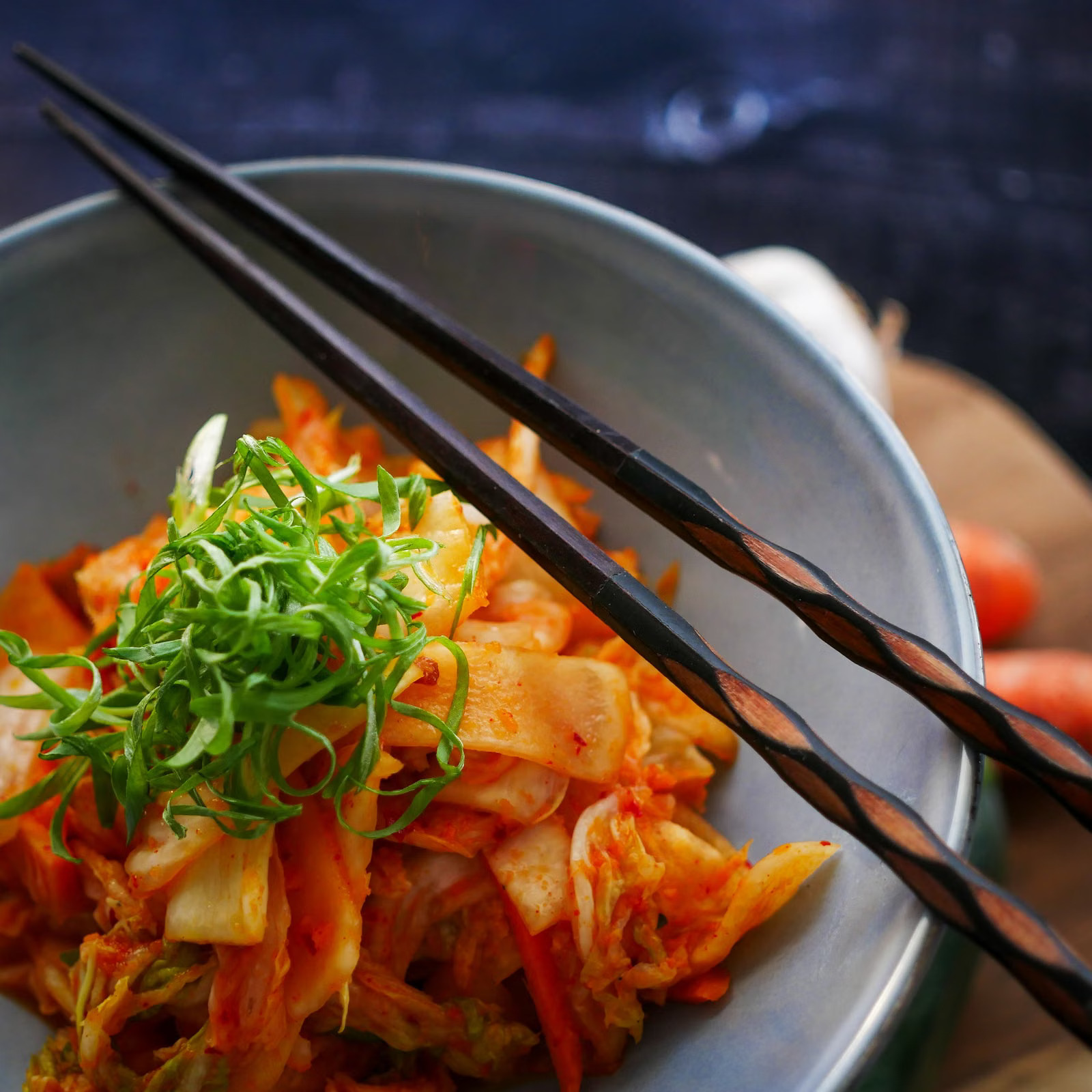
Banchan are small side dishes; kimchi is only one example. Three to five bowls are enough for a relaxed home dinner: kimchi, cucumber salad, pickled radish, seasoned spinach or bean sprouts. They do not all have to be homemade. Mixing ready-made and fresh sides keeps the evening manageable.
Two dips that work for most guests
Mild sesame-oil dip: toasted sesame oil with a pinch of salt and pepper. Nutty, intense and chilli-free.
Ssamjang dip: use ssamjang as it is, or loosen it with a little sesame oil, chopped spring onion and a splash of water. Ssamjang is strong and salty, so a small amount is enough.
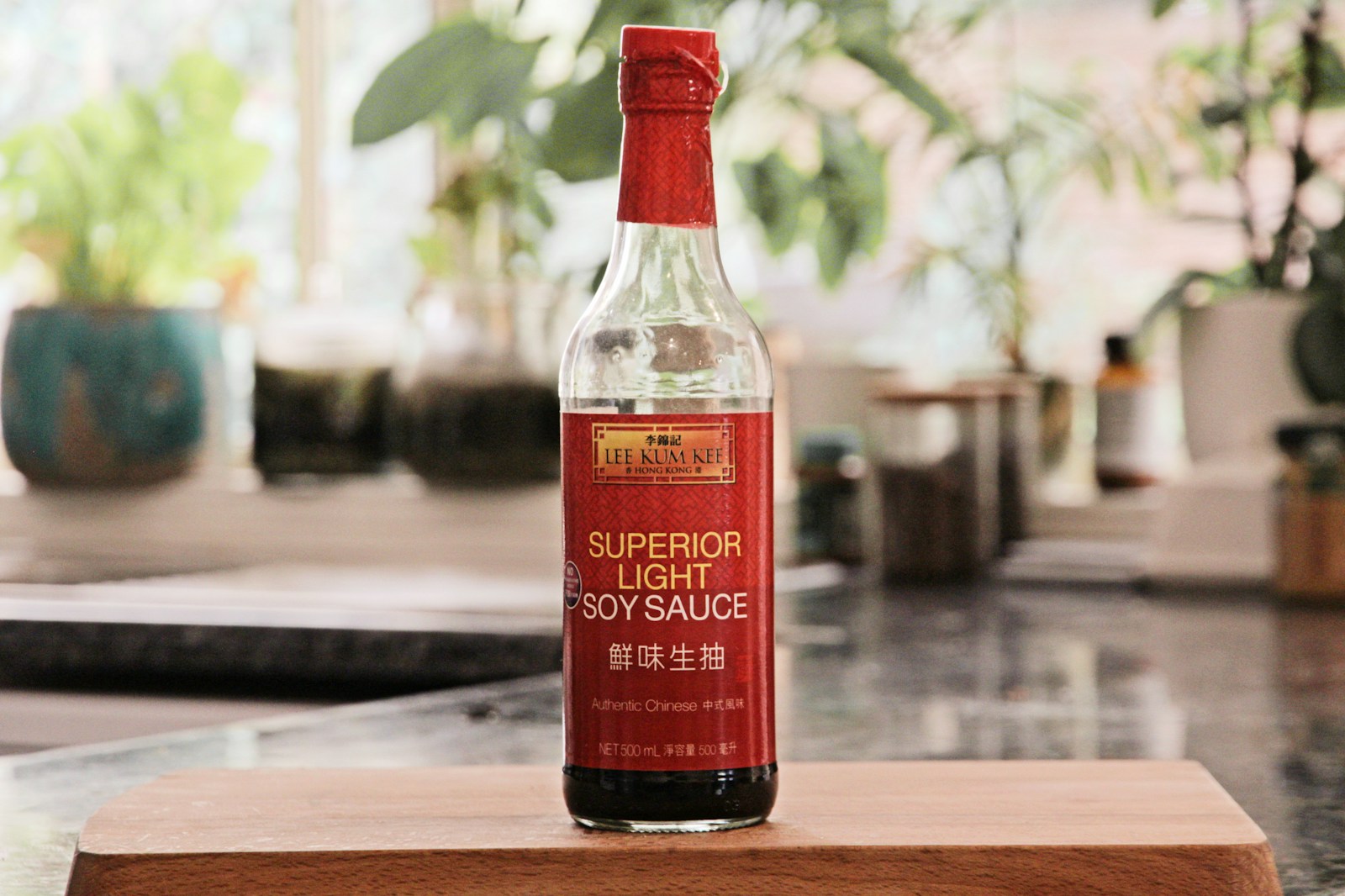
Useful related ingredients include gochujang, kimchi, sesame oil and soy sauce. The existing K-Food guide can provide ideas for the rest of the table.
A Japanese grill evening: yakitori and yakiniku are not the same
The two terms both describe grilled food, but the format differs.
Yakitori normally means small pieces of chicken on skewers. Different chicken parts are used in Japan; for an easy home version, boneless chicken thighs are forgiving because they remain juicy. They are usually seasoned with shio—salt—or tare, a sweet and savoury glaze.
Yakiniku, by contrast, means small pieces of meat and vegetables grilled at the table and dipped afterwards. The organisation resembles Korean BBQ, but the flavouring can be more restrained: good ingredients, a hot grill, a few sides and a clear dipping sauce.
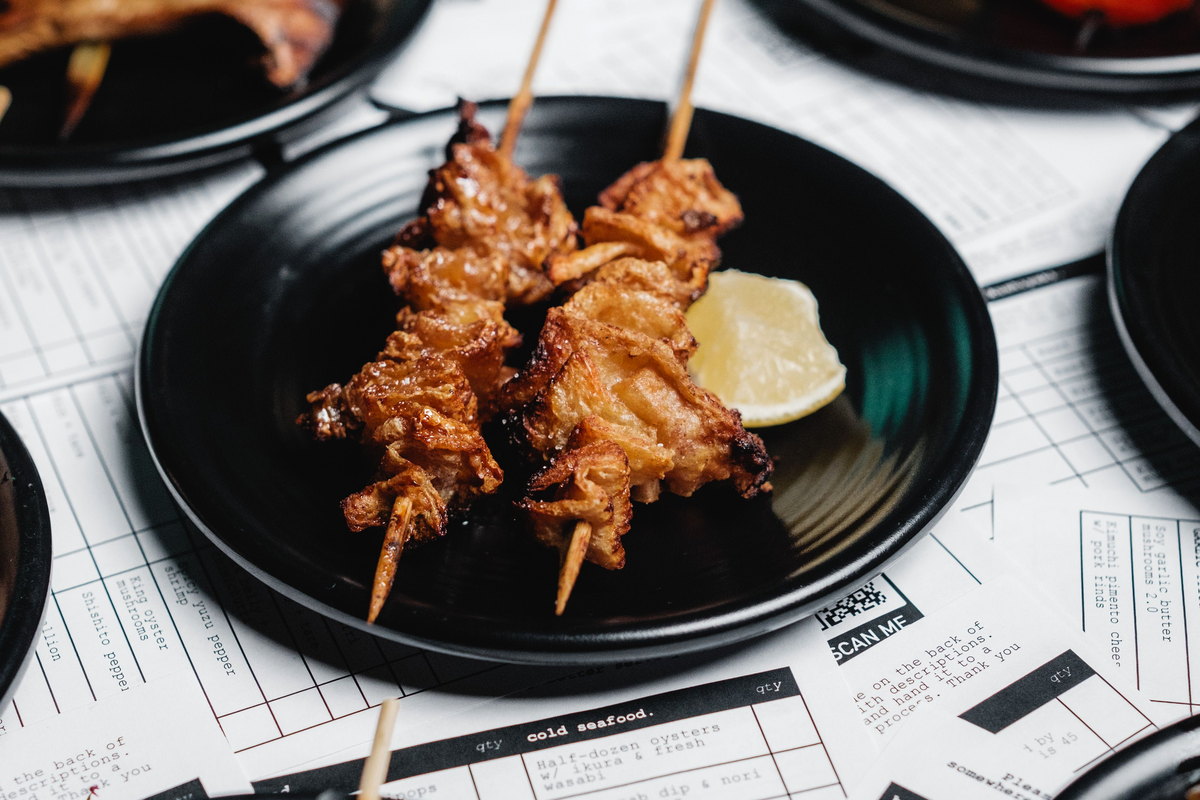
Yakitori on a normal barbecue
Cut boneless chicken thighs into even pieces and thread them closely onto soaked bamboo skewers. A useful beginner combination is negima, alternating chicken with thick pieces of spring onion.
For a simple tare, simmer soy sauce, mirin and a little sugar or honey until lightly syrupy. Brush the skewers in thin layers only near the end so the sugar does not burn. For an alcohol-free option, use a labelled alcohol-free mirin alternative or mix soy sauce, water, rice vinegar and a little sweetness. It serves a similar purpose but is not identical in flavour.
Alongside chicken, the grill can hold:
- spring onions;
- shiitake or king oyster mushrooms;
- courgette;
- peppers;
- baby corn;
- aubergine.
Serve with jasmine rice or Japanese short-grain rice, a light cucumber salad and two seasonings: mild tare and optional chilli or shichimi on the side.
Yakiniku at home
For yakiniku, cut beef, pork or chicken into small pieces that are not too thick. Rather than heavily marinating everything, lightly salt one batch and dip it after grilling. This lets guests notice the differences between the meat, mushrooms and vegetables.
A quick dipping sauce can combine soy sauce, grated apple, garlic, sesame oil and rice vinegar. Make a second bowl from the same base with chilli or gochujang so mild and spicy eaters can share the same grill.
Grilling satay: smoke, spice and creamy peanut sauce
Satay is ideal for an outdoor barbecue because the pieces are small, cook quickly and pick up a smoky aroma. Chicken is the most familiar choice, but pork, beef or firm tofu also work. The meat should be cut into thin strips or small flat pieces, not large cubes. More surface means more marinade and quicker cooking.
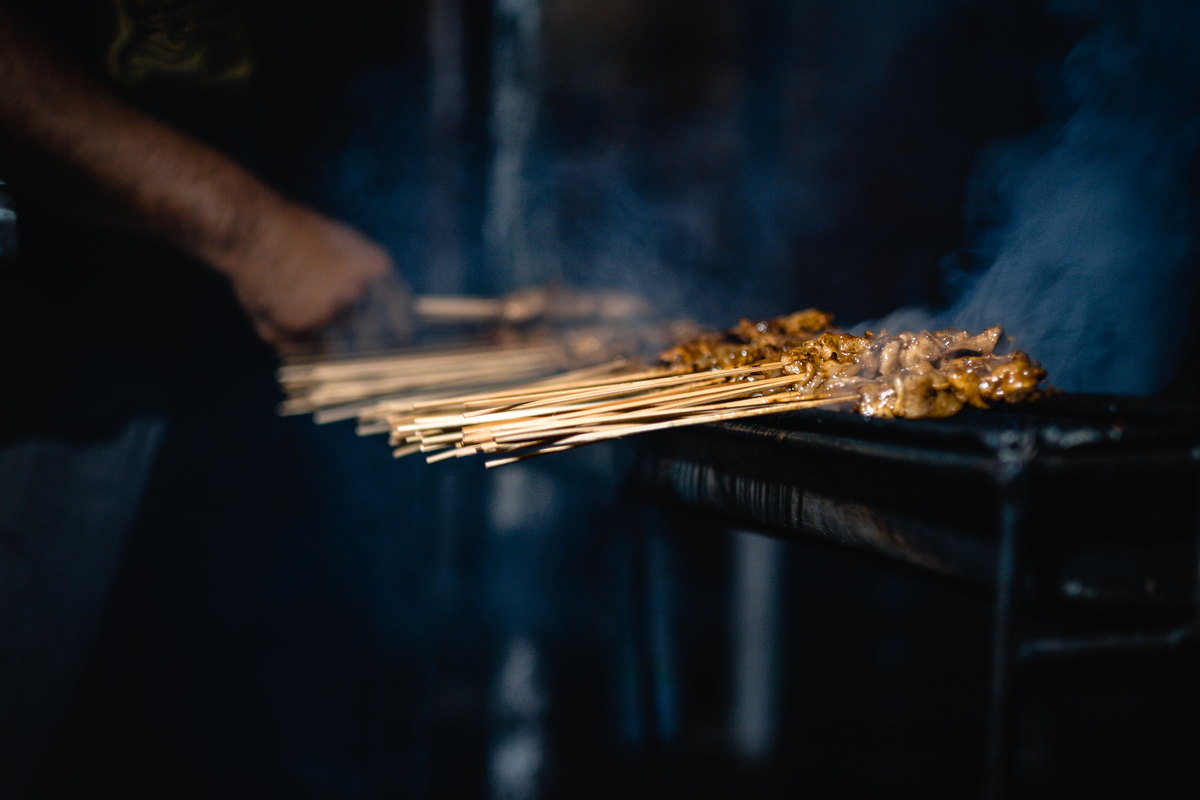
The marinade
A home-friendly satay marinade may include:
- coconut milk;
- curry powder or a suitable spice paste;
- garlic;
- a little soy sauce or fish sauce;
- sugar;
- optional lemongrass, turmeric or coriander.
Coconut milk helps the spices cling and gives a rounded flavour. It does not replace cooking oil completely, and a very wet marinade should be drained lightly before the skewers go over the heat.
For a mild family version, use aromatic curry powder and leave chilli out. Put sambal or chilli sauce on the table instead. For a stronger version, add chilli to only part of the marinade.
Peanut sauce: ready-made or adjusted at home
A ready-made satay or peanut sauce is practical when the rest of the table already requires preparation. Taste it before serving: some are thick and sweet, others saltier or hotter. Coconut milk or warm water can loosen it; lime juice can add freshness.
A simple homemade direction uses peanut butter, coconut milk, soy sauce or fish sauce, lime juice, sugar and optional chilli. Heat gently and stir until smooth. Do not boil it aggressively, as the sauce can split or catch on the pan.
For peanut allergies, do not merely remove the visible peanuts. Check all sauces, pastes and trace warnings. A sweet-sour cucumber relish is a good separate accompaniment, but it should not be presented as peanut sauce.
Cucumber relish as a fresh contrast
Slice cucumber and red onion thinly, then dress them with rice vinegar, a little sugar, salt and lime. The relish cuts through the richness of coconut marinade and peanut sauce. Keep the chilli separate for a child-friendly table.
Vietnamese grilling: hot meat, cool noodles and many herbs
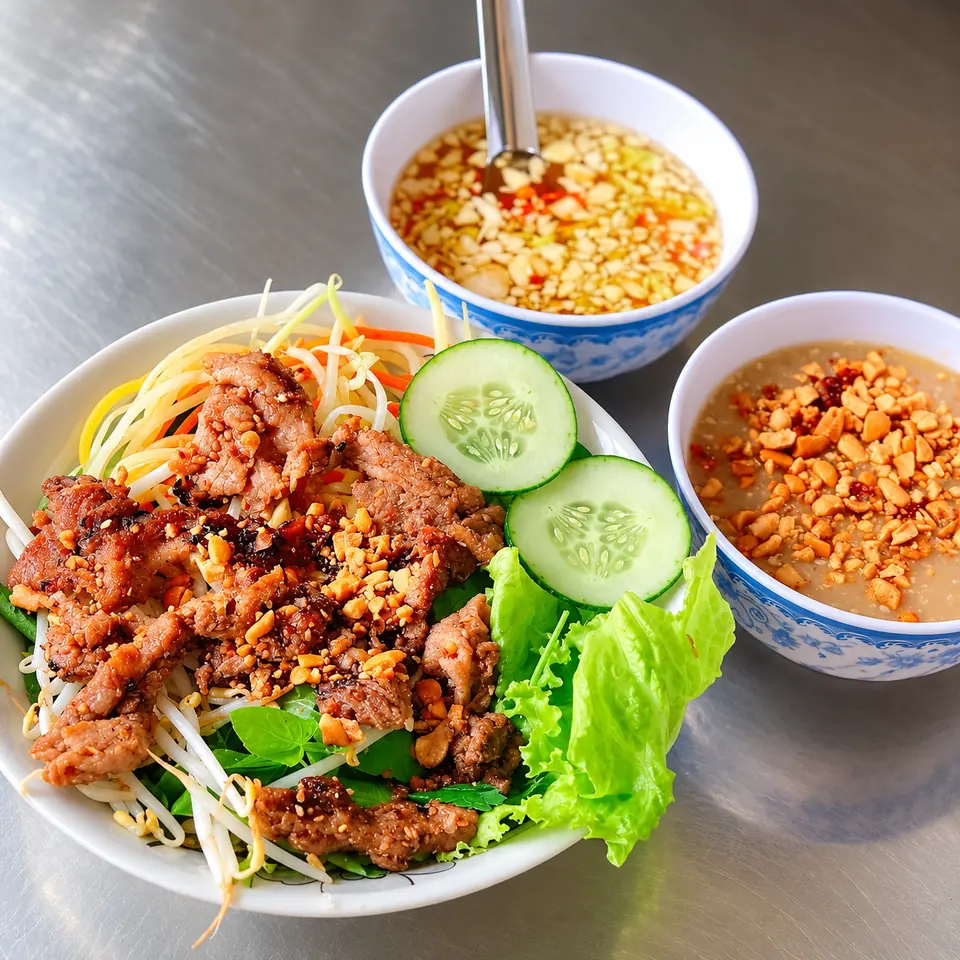
Vietnamese grilled dishes create contrast. Warm pork or chicken comes from the grill, while rice noodles, lettuce, cucumber and herbs remain cool and fresh. Nước chấm adds sweet, sour, salty and savoury notes, and roasted peanuts or fried shallots provide crunch.
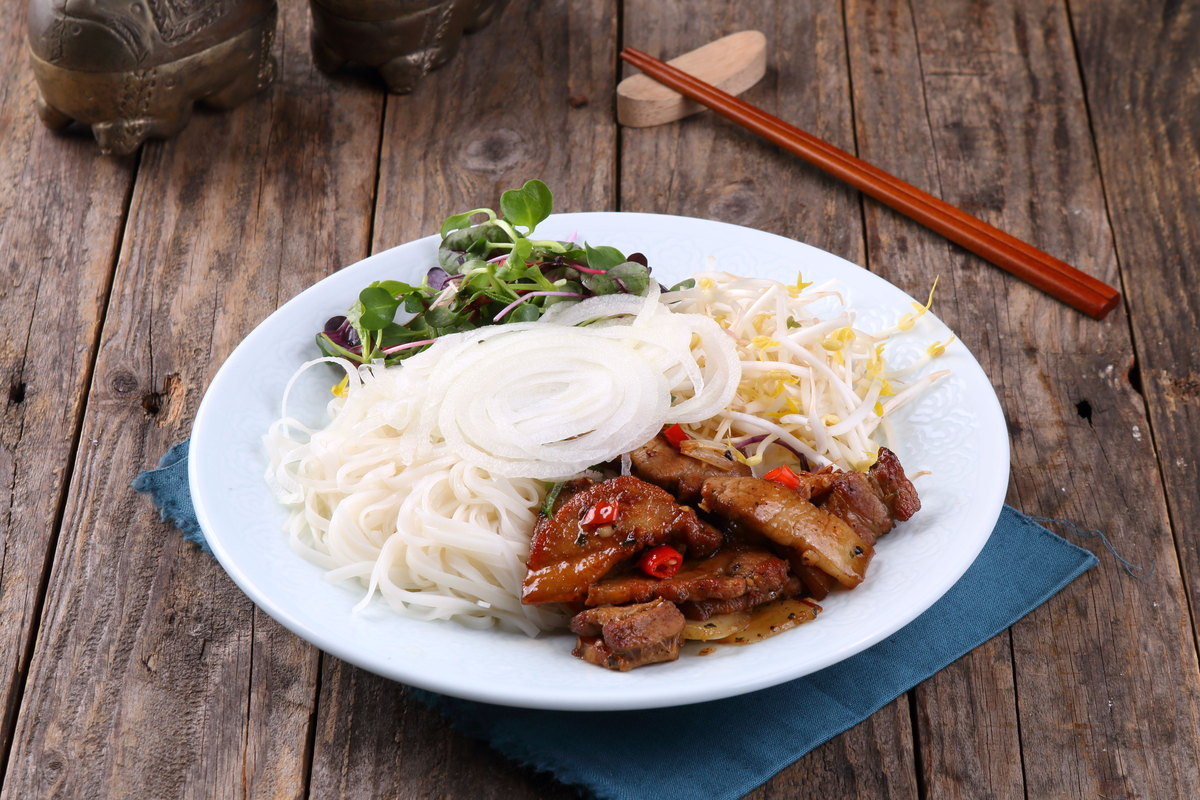
Bún thịt nướng as a shared grill evening
Bún thịt nướng is often served as an individual noodle bowl, but the same elements work beautifully as a shared barbecue table:
- a platter of rice noodles;
- bowls of lettuce, cucumber and carrot;
- mint, coriander and Thai basil when available;
- grilled lemongrass pork, chicken or clearly labelled tofu variation;
- nước chấm;
- roasted peanuts or crisp shallots;
- optional rice paper for wrapping.
Guests can build bowls or make fresh rolls from the same ingredients. Rice paper adds a little more work but also makes the meal playful. Dip each sheet briefly in water and allow it to soften on the plate rather than soaking it until floppy.
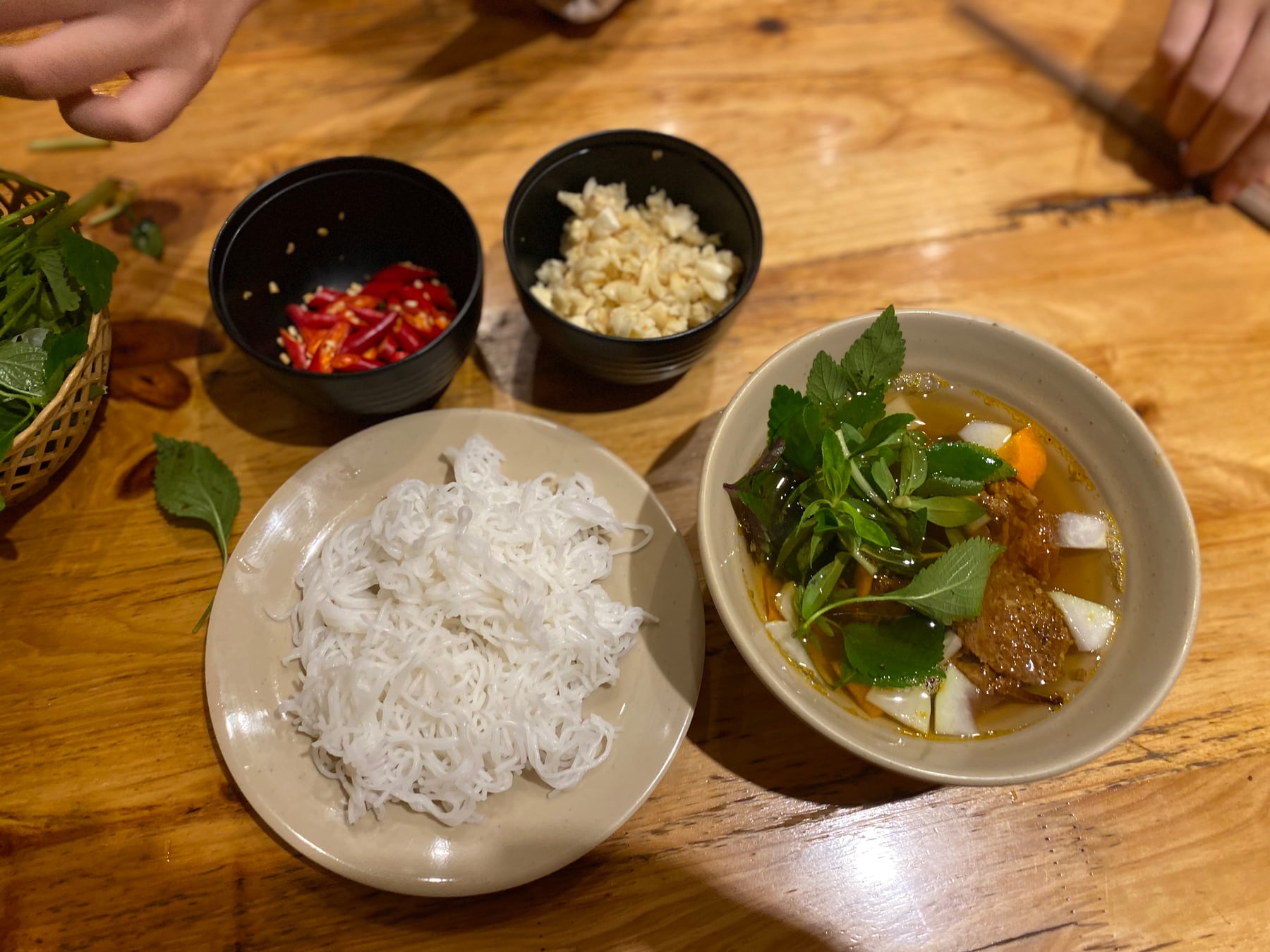
For a more northern-style direction, bún chả combines grilled pork with noodles, herbs and dipping sauce. The existing bún thịt nướng and bún chả pages can carry the detailed recipes, while this guide focuses on planning the evening.
Mild or bold lemongrass marinade
A practical marinade for pork, chicken or tofu uses finely chopped lemongrass, garlic, shallot, fish sauce or soy sauce, sugar and neutral oil.
Mild: no chilli, a little less fish sauce and fresh lime at the table.
Stronger: add chilli, black pepper and more garlic. For tofu, allow a little extra time for the surface to dry so it browns rather than steaming.
A vegan variation can use soy sauce and mushroom seasoning instead of fish sauce. It is a separate variation, not the same seasoning as traditional nước chấm.
Vegetarian Asian grilling: more than courgette
Vegetarian grilling becomes much more interesting when ingredients are chosen for texture and their ability to hold sauce.
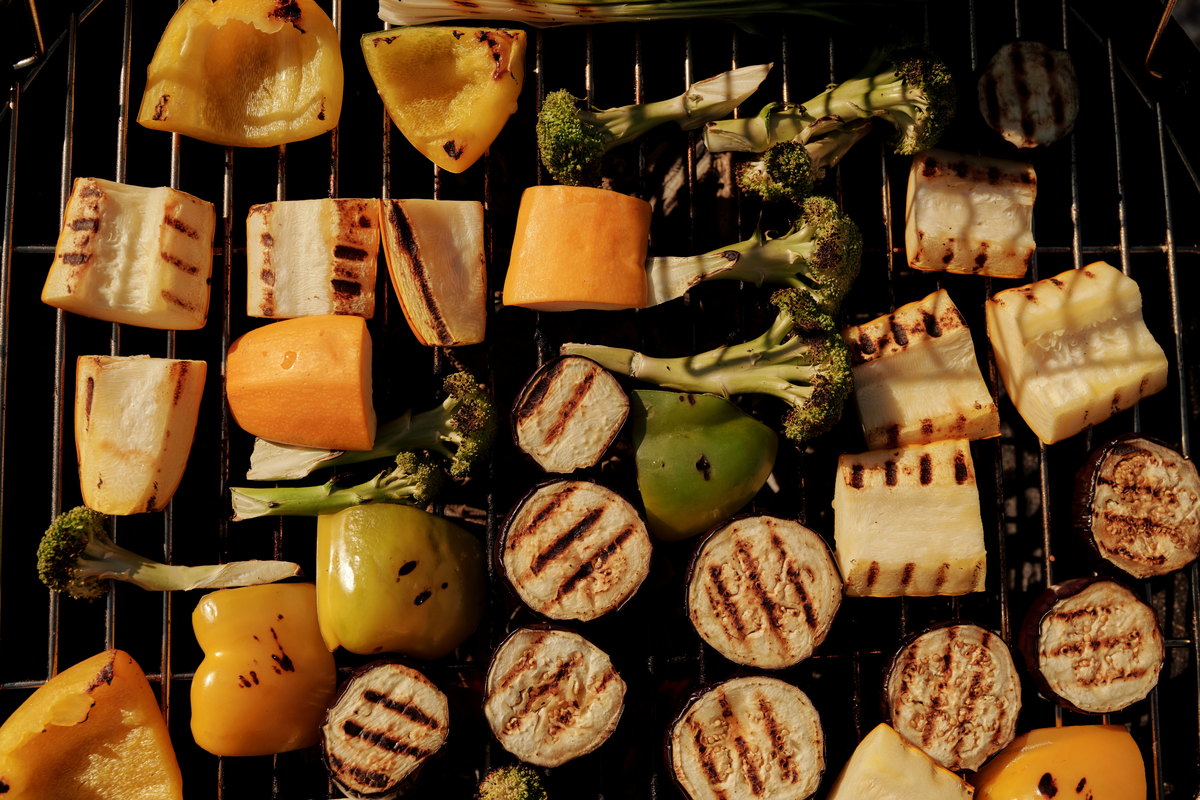
Firm tofu
Press or pat firm tofu dry, cut it into thick slices and marinate it briefly with soy sauce, sesame oil, garlic and a little sweetness. A grill plate or basket prevents sticking and breakage. Apply sugary glaze near the end.
King oyster mushrooms
King oyster mushrooms remain juicy and develop meaty edges. Slice them lengthwise or cut them into thick coins. They work with bulgogi-style marinade, yakiniku dip or Vietnamese lemongrass seasoning.
Aubergine
Aubergine absorbs marinade readily. Lightly oil thick slices first, grill them, then finish with miso or soy glaze. Sugary sauce applied too early burns quickly.
Sweetcorn and courgette
Sweetcorn brings sweetness; courgette brings freshness. Both are mild and useful when children or guests with little chilli experience are eating. Add umami after grilling with a little soy sauce, sesame oil or tare.
Tofu skin
Tofu skin may be thin, folded, dried or frozen. Not every version can be placed directly on an open grate. Follow the product instructions and cook delicate pieces in a basket or on a plate. Ask the shop when the preparation method is unclear.
Which grill works best?
Normal gas or charcoal barbecue
Ideal for satay, yakitori, larger tofu slices, mushrooms and Vietnamese-marinated meat. Use a plate, cast-iron pan or fine basket for small bulgogi and yakiniku pieces.
Plancha or grill plate
Especially useful for thin slices, small ingredients and marinades. Food cannot fall through the grate, and sticky sauces are easier to control.
Electric tabletop grill
This brings the social cooking experience directly to the table. Use only a device whose manufacturer explicitly permits the intended indoor use. Keep it stable, away from children and combustible material, with suitable ventilation. Hot fat, steam and cables need deliberate handling.
Important: Never operate charcoal or other open-combustion grills in living spaces, garages or other enclosed areas. Indoors, use only approved electric equipment according to the manufacturer’s instructions.
A sauce bar for mild and spicy eaters
Instead of making every marinade very hot, place four small bowls on the table:
- Mild and nutty: sesame oil with salt.
- Sweet and savoury: tare or mild yakiniku sauce.
- Creamy: peanut or satay sauce.
- Hot: gochujang dip or chilli nước chấm.
Add lime wedges, spring onions and toasted sesame seeds. The base meal stays family-friendly, while each person controls heat and acidity.
Food safety for tabletop grilling
During shared grilling, hands, tongs and plates move between many bowls. Clear separation protects everyone:
- Keep raw meat, especially poultry, away from lettuce, herbs, rice and cooked food.
- Use separate tongs or chopsticks for raw ingredients; remove cooked food with clean utensils.
- Do not serve marinade that has touched raw meat as an uncooked dip.
- Keep perishable food chilled until shortly before grilling.
- Cook meat thoroughly. The German Federal Institute for Risk Assessment gives 70°C for two minutes throughout the food as a practical safety orientation.
- Do not leave children unattended near hot tabletop grills, cables or open cooking surfaces.
Four ready-made shopping lists for four people
The quantities are guides. Appetite, side dishes and the number of vegetarian guests change the amount required. Fresh, chilled and frozen items and exact brands may vary; availability and prices are confirmed before pickup.
1. Korean BBQ basket
For the grill
- 600–800 g thinly sliced beef and/or pork belly;
- 250–300 g king oyster mushrooms or other mushrooms;
- 1 bunch spring onions;
- 1–2 peppers or 1 courgette.
For marinade and dips
- soy sauce;
- toasted sesame oil;
- ssamjang;
- gochujang, optional;
- garlic;
- sesame seeds.
For the table
- 1 jar or tub kimchi;
- 1–2 heads leaf lettuce;
- cucumber or pickled radish;
- 400–500 g rice;
- optional mandu, snacks and alcohol-free drinks.
2. Yakitori evening
For the skewers
- 700–800 g boneless chicken thighs;
- 2 bunches spring onions;
- mushrooms, courgette and baby corn as desired;
- bamboo or metal skewers.
For tare and sides
- soy sauce;
- mirin or a labelled alcohol-free alternative;
- sugar or honey;
- rice vinegar;
- 400–500 g rice;
- 1–2 cucumbers;
- chilli or shichimi, optional.
3. Satay grill
For the skewers
- 700–800 g chicken or 500–600 g firm tofu;
- 1 tin coconut milk;
- curry powder or suitable spice paste;
- garlic and optional lemongrass;
- bamboo skewers.
For sauce and sides
- ready-made satay or peanut sauce, or peanut butter;
- soy sauce or fish sauce;
- 1–2 cucumbers;
- 1 red onion;
- rice vinegar and limes;
- 400–500 g jasmine rice;
- chilli served separately.
4. Vietnamese summer grill
For the grill
- 700–800 g pork neck, chicken or firm tofu;
- 2–3 stalks lemongrass;
- garlic and shallots;
- fish sauce or a clearly labelled vegan alternative.
For bowls and rolls
- 250–300 g rice noodles;
- rice paper, optional;
- leaf lettuce, cucumber and carrot;
- mint, coriander and Thai basil when available;
- limes;
- sugar and chilli;
- peanuts or crisp shallots, optional.
Prepare your Asian barbecue evening in Ingolstadt
Rather than searching for every bottle separately, add one of the baskets to your pickup list and use the free-text field to say how many people are eating and whether you prefer a mild, spicy or vegetarian selection.
The request is non-binding. Asia Markt Thien Tam checks available products, fresh items, exact brands and prices manually and contacts you before pickup. You can also ask for alternatives when ssamjang, fresh herbs, a specific cut of meat or a sauce is not currently available.
Frequently asked questions
Can I make Korean BBQ on a normal barbecue?
Yes. Larger slices and pork belly work directly on the grate. For thin bulgogi and small yakiniku pieces, use a grill plate, plancha, cast-iron pan or fine basket.
What is the difference between yakitori and yakiniku?
Yakitori are mainly small pieces of chicken on skewers, usually seasoned with salt or tare. With yakiniku, diners grill small pieces of meat and vegetables in batches and dip them afterwards.
Which ingredients do I need for Korean BBQ at home?
A good base is thinly sliced meat or pork belly, rice, leaf lettuce, kimchi, ssamjang, sesame oil, soy sauce, garlic and one or two vegetables. Gochujang is optional for a spicy sauce.
How can I keep an Asian barbecue evening mild?
Marinate the main ingredients without chilli and serve heat separately. Sesame-oil dip, mild tare, cucumber relish, rice and fresh herbs provide plenty of flavour without strong spice.
What can I grill for a vegetarian Asian barbecue?
Firm tofu, king oyster mushrooms, aubergine, courgette, sweetcorn and suitable tofu-skin products work well. Cook delicate ingredients on a grill plate or in a basket.
Can I serve satay without peanuts?
Yes. The skewer itself does not require peanuts. Serve a sweet-sour cucumber relish or another suitable dip instead. For allergies, always check every product label and trace warning.
Allergens and availability
Depending on the products used, the meal may contain soy, gluten, sesame, peanuts and fish. Recipes differ by brand. The ingredients list and allergen information on the packaging are decisive.
The assortment, brands and fresh, chilled or frozen products can change. These shopping lists are suggestions, not a promise of stock.
Editorial sources and further reading
- Japan National Tourism Organization: yakitori, shio and tare; yakiniku as piece-by-piece tabletop grilling.
- Korea.net: grilled Korean meat with lettuce or perilla and ssamjang.
- Tourism Malaysia: satay as grilled skewers with peanut sauce and fresh accompaniments.
- Vietnam Tourism: bún thịt nướng and bún chả with grilled pork, rice noodles, herbs and fish-sauce seasoning.
- German Federal Institute for Risk Assessment: avoid cross-contamination, cook meat thoroughly and never use charcoal indoors.
The full links and access notes are included in the technical sources file supplied with this content package.