Light and dark soy sauce are not simply the same sauce in two shades. Production styles and recipes vary by tradition and brand, and the two products often perform different jobs in cooking.
| Light soy sauce | Dark soy sauce | |
|---|---|---|
| Main role | seasoning, salt and umami | colour, depth and sometimes rounder sweetness |
| Texture | usually thin | often fuller or slightly syrupy |
| Common uses | dipping, marinades, stir-fries, everyday seasoning | braises, fried rice, dark sauces |
| Typical amount | often the main soy seasoning | commonly added in a smaller supporting amount |
Light soy sauce
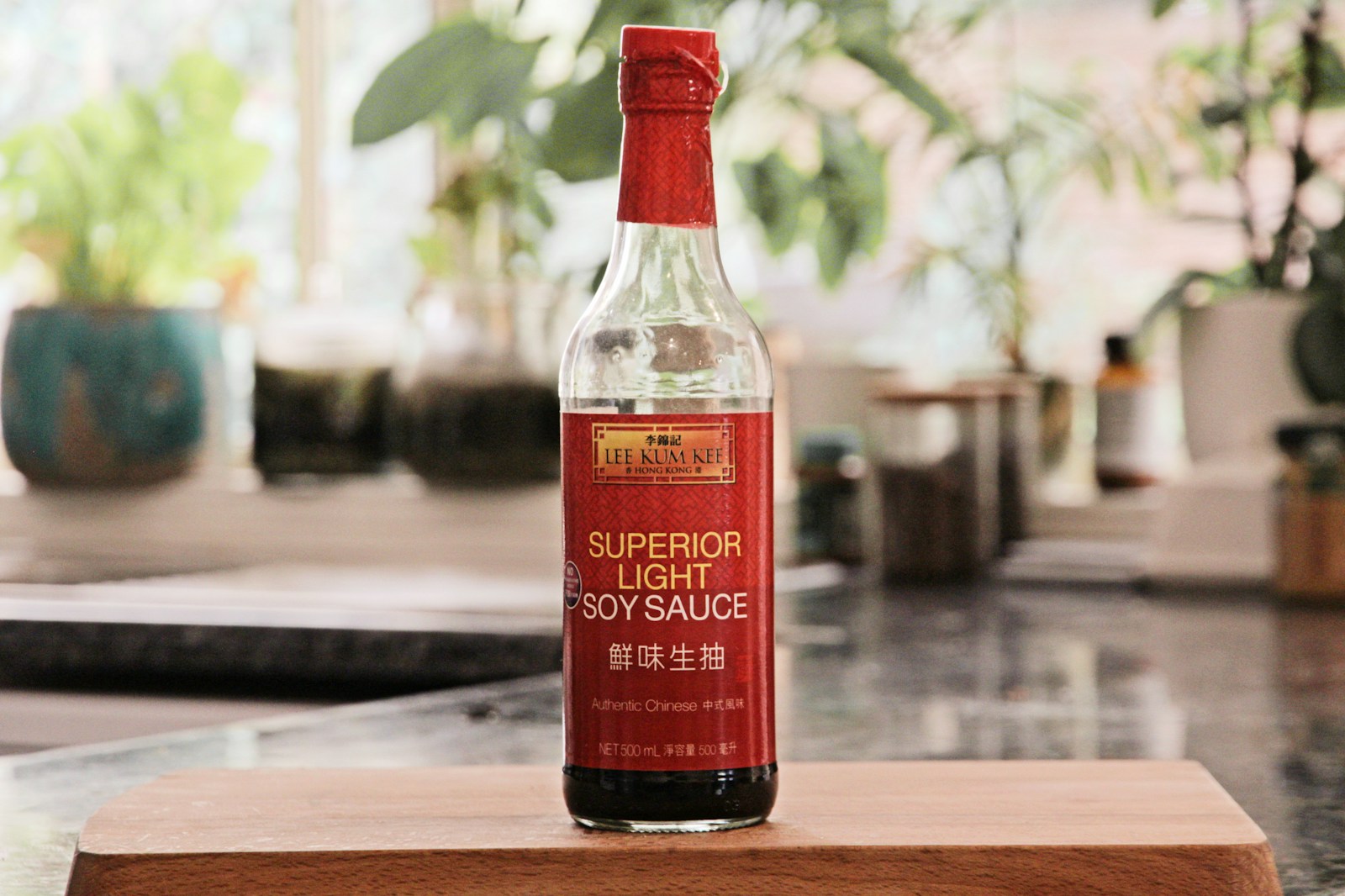
In many Chinese-style recipes, an unqualified instruction for “soy sauce” often refers to a light soy sauce. It is still brown despite the name and can taste distinctly salty. It works well in vegetable dishes, noodles, marinades and dipping sauces. Japanese all-purpose soy sauce or shoyu is not exactly the same product, although it may play a similar role in many home recipes.
Dark soy sauce
Dark soy sauce is commonly used to create deeper colour and a rounder flavour. Some products contain sugar or additional ingredients, while others do not. It is often paired with light soy sauce: light soy seasons the dish, while dark soy adds colour and depth. Too much can make the result very dark and heavy.
What about sweet soy sauce?
Sweet soy sauces such as Indonesian kecap manis are a separate category. They are thick and clearly sweet, so they are not a direct replacement for Chinese light or dark soy sauce. Mushroom-flavoured and gluten-free-labelled products should also be assessed by reading the actual ingredients.
Which should you buy?
- One bottle for broad everyday use: a regular all-purpose or light soy sauce.
- Chinese braises and wok dishes: light soy plus a small bottle of dark soy.
- Japanese cooking: a Japanese soy sauce or shoyu suited to the recipe.
- Avoiding gluten: choose a specifically labelled product and verify the ingredients; tamari is not automatically gluten-free in every formulation.
Common mistakes
- Replacing light soy with the same amount of dark soy.
- Adding substantial salt before the sauce has reduced.
- Choosing by colour alone instead of reading ingredients and nutrition information.
- Forgetting allergens: soy itself is a declared allergen, and many soy sauces also contain wheat.
Storage
Follow the bottle instructions. Close it cleanly and store away from heat and light. Some manufacturers specifically recommend refrigeration after opening to preserve flavour and quality.
Related guides
Continue with: Rice noodles, glass noodles or wheat noodles: which do you need?, Firm, soft or silken tofu: which one fits your dish?, Asian pantry essentials: start small and cook more.