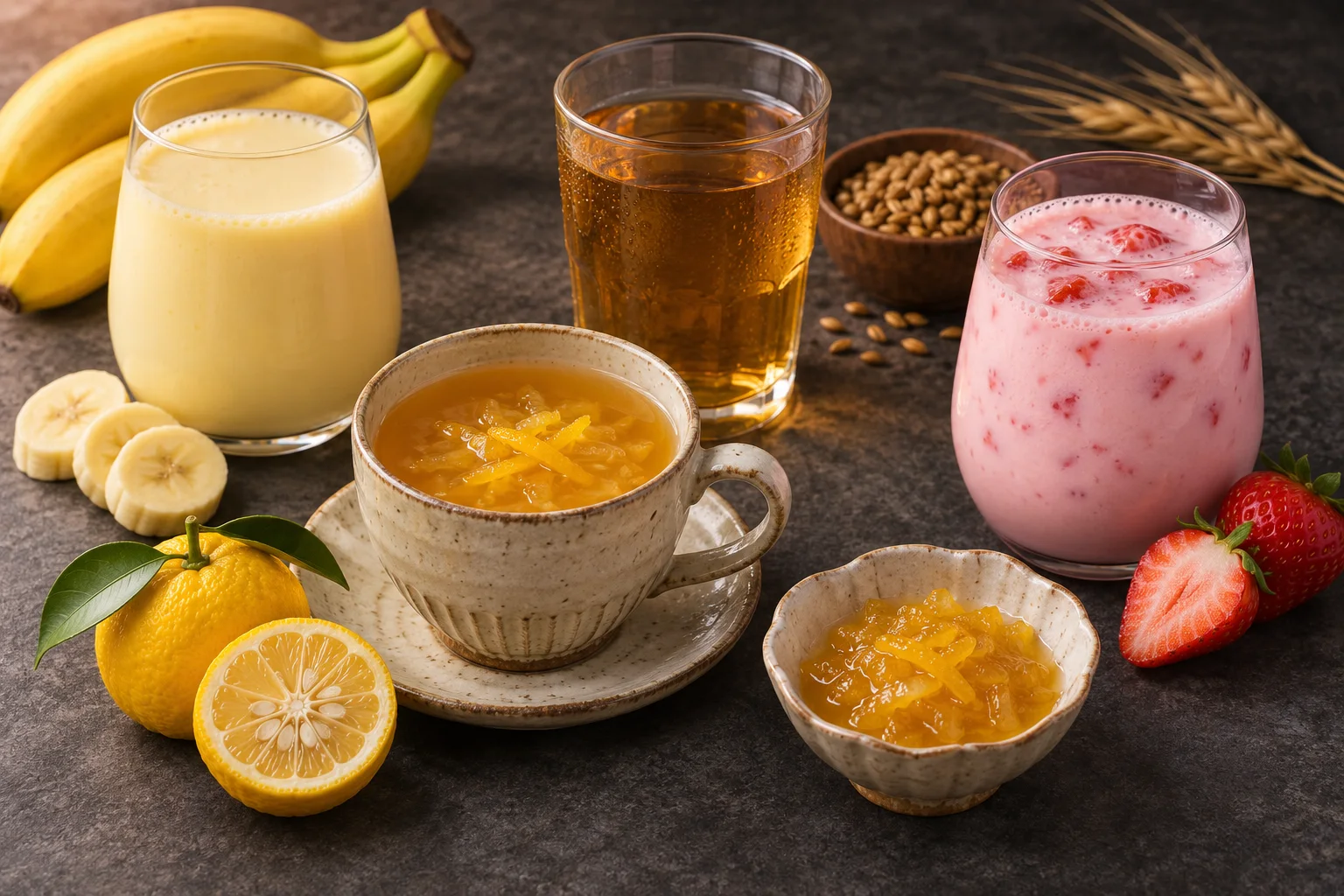
Korean drinks range from unsweetened tea to sweet convenience-store milk. They do not all come from the same era: boricha and sikhye have longer traditions, while packaged banana milk and café-style strawberry milk are modern favourites. Each quantity below makes two glasses or cups.
Banana milk · 5 minutes
Blend one ripe banana (about 120 g flesh) with 300 ml milk and 1–2 tsp sugar or honey if needed. Serve cold. Unsweetened oat or soy drink makes a dairy-free variation, though flavour and sweetness change. Drink fresh; refrigerate leftovers covered and use within 24 hours. Check milk, soy and oat allergens.
Yuja-cha · 3 minutes
Stir 1–2 tbsp yuja fruit preserve (유자청) into each cup with 200 ml hot but not boiling water. Adjust sweetness. You can also mix it with cold water and ice. Korean yuja preserve is not automatically the same as a Japanese yuzu product; check fruit and sugar content. Store an opened jar as directed.
Boricha · 15 minutes plus cooling
Simmer or steep 20 g roasted barley in 600 ml water for 10–15 minutes, then strain. Drink warm or chilled, usually without sugar. Follow the pack for tea bags. Barley contains gluten, so barley-based boricha is unsuitable for coeliac disease.
Sikhye and strawberry milk
Sikhye (식혜) is a sweet rice drink traditionally made with cooked rice and barley malt. Controlling malt and temperature is more involved than a quick blender recipe; a packaged version is a simple introduction. Check sugar and barley ingredients.
For two glasses of modern strawberry milk, crush 150 g ripe strawberries with 1–2 tsp sugar and divide between 300 ml cold milk. This is a contemporary home variation, not an ancient recipe. Soy or oat drink works without dairy. Serve fresh and drink refrigerated leftovers within 24 hours.
Shop locally
Ask Asia Markt Thien Tam in Ingolstadt about yuja preserve, roasted barley or packaged sikhye. Ordinary supermarkets cover fruit and milk. A non-binding pickup enquiry lets the shop confirm which specialist items are actually available.
The shop will confirm availability of individual ingredients.