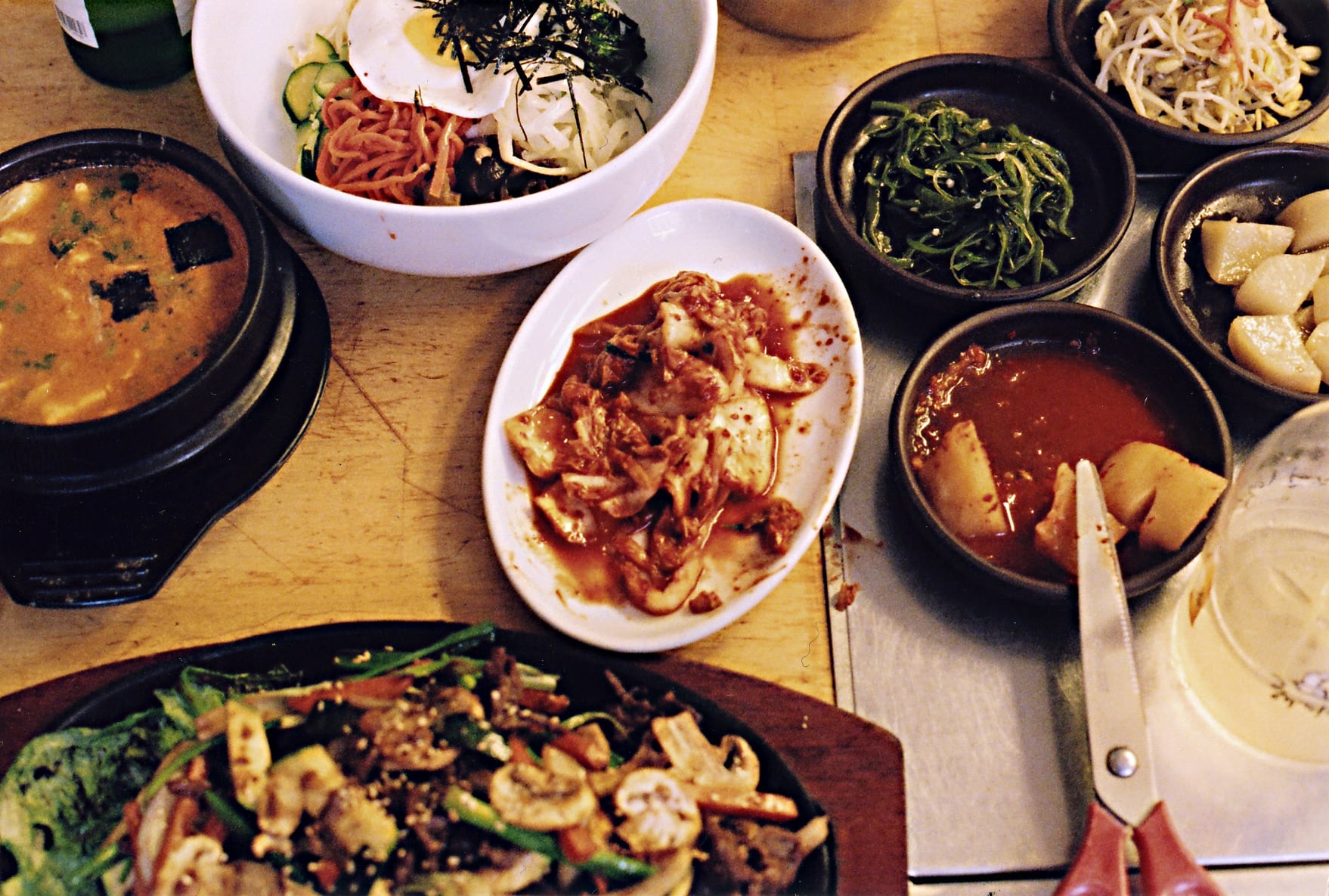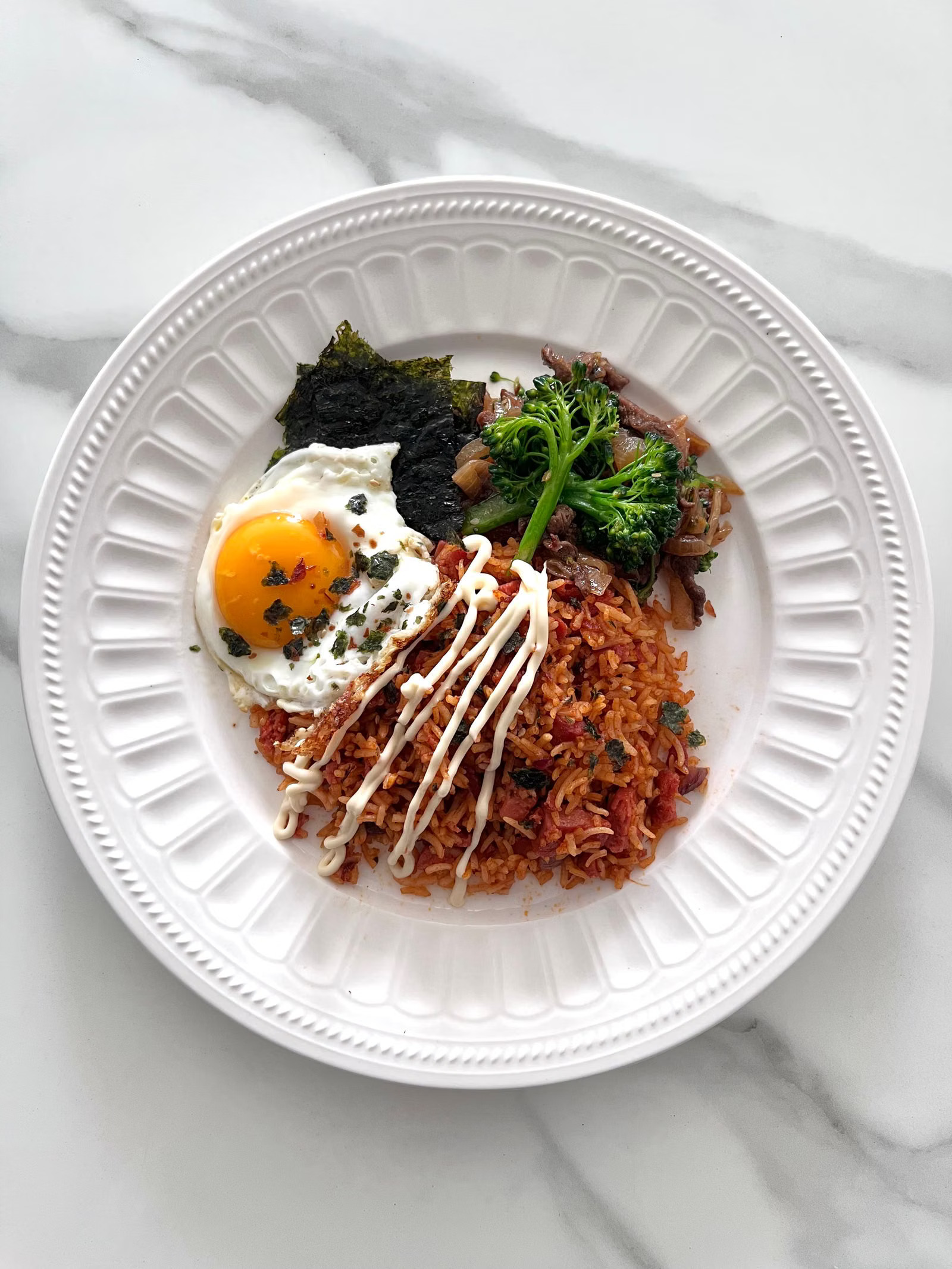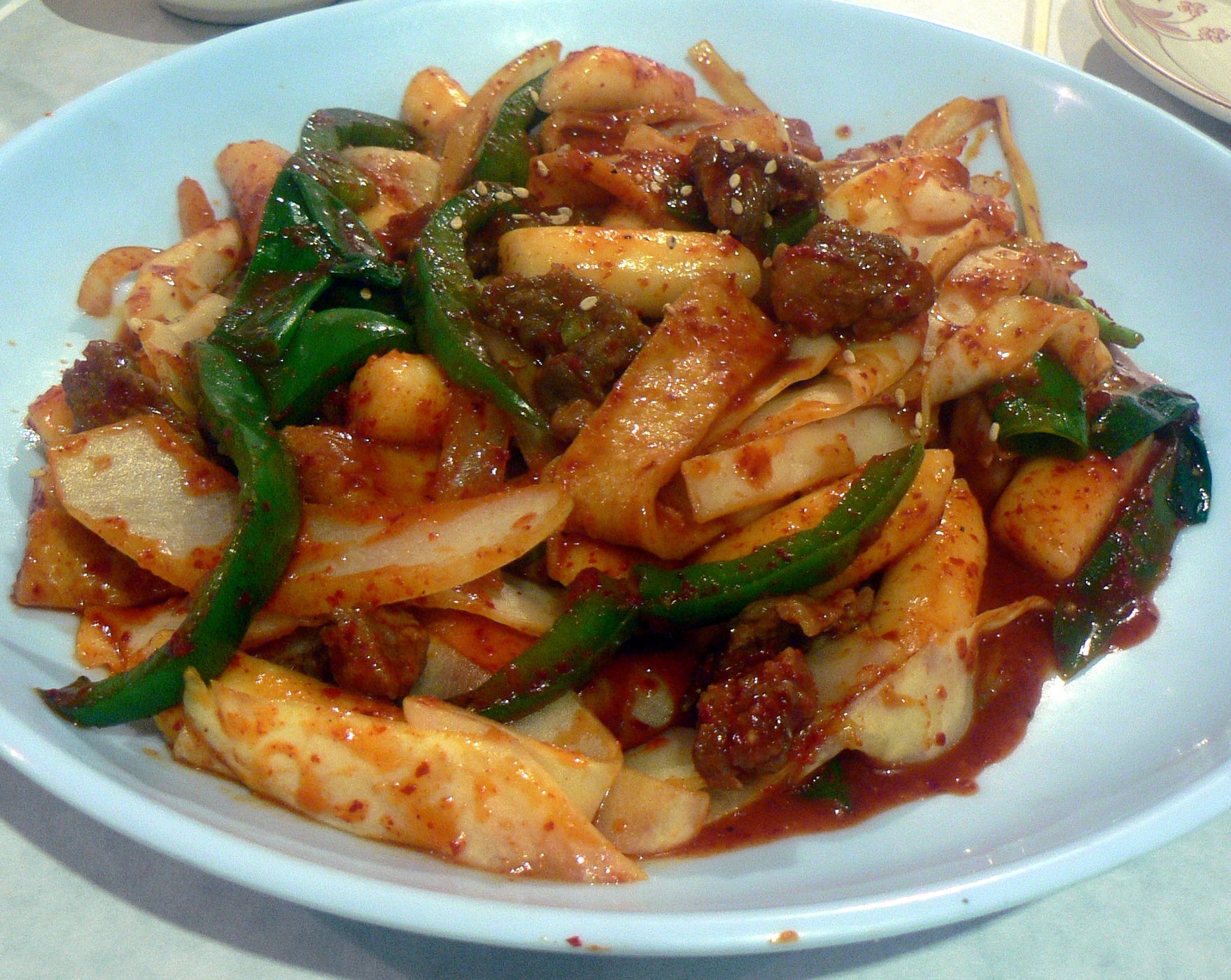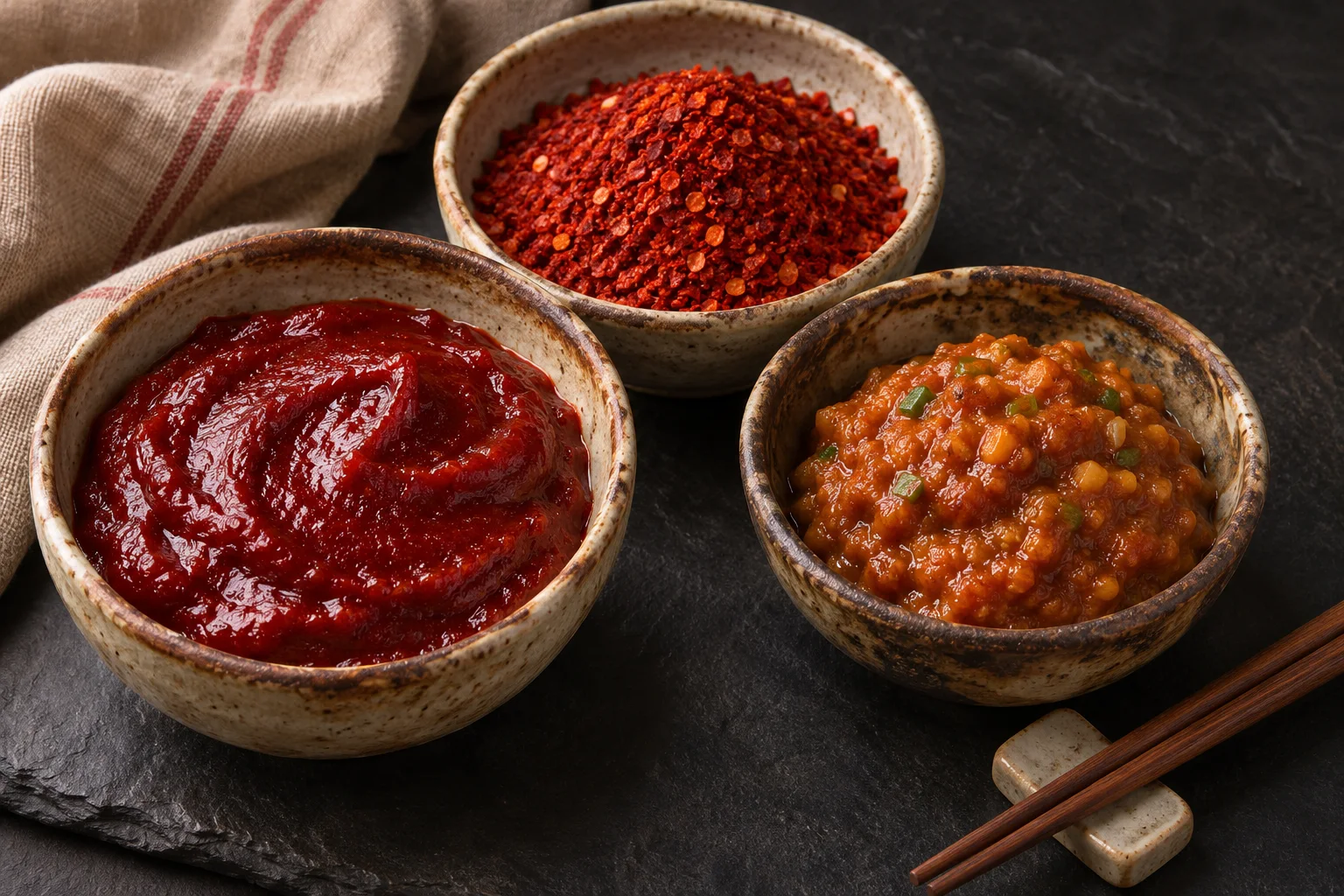
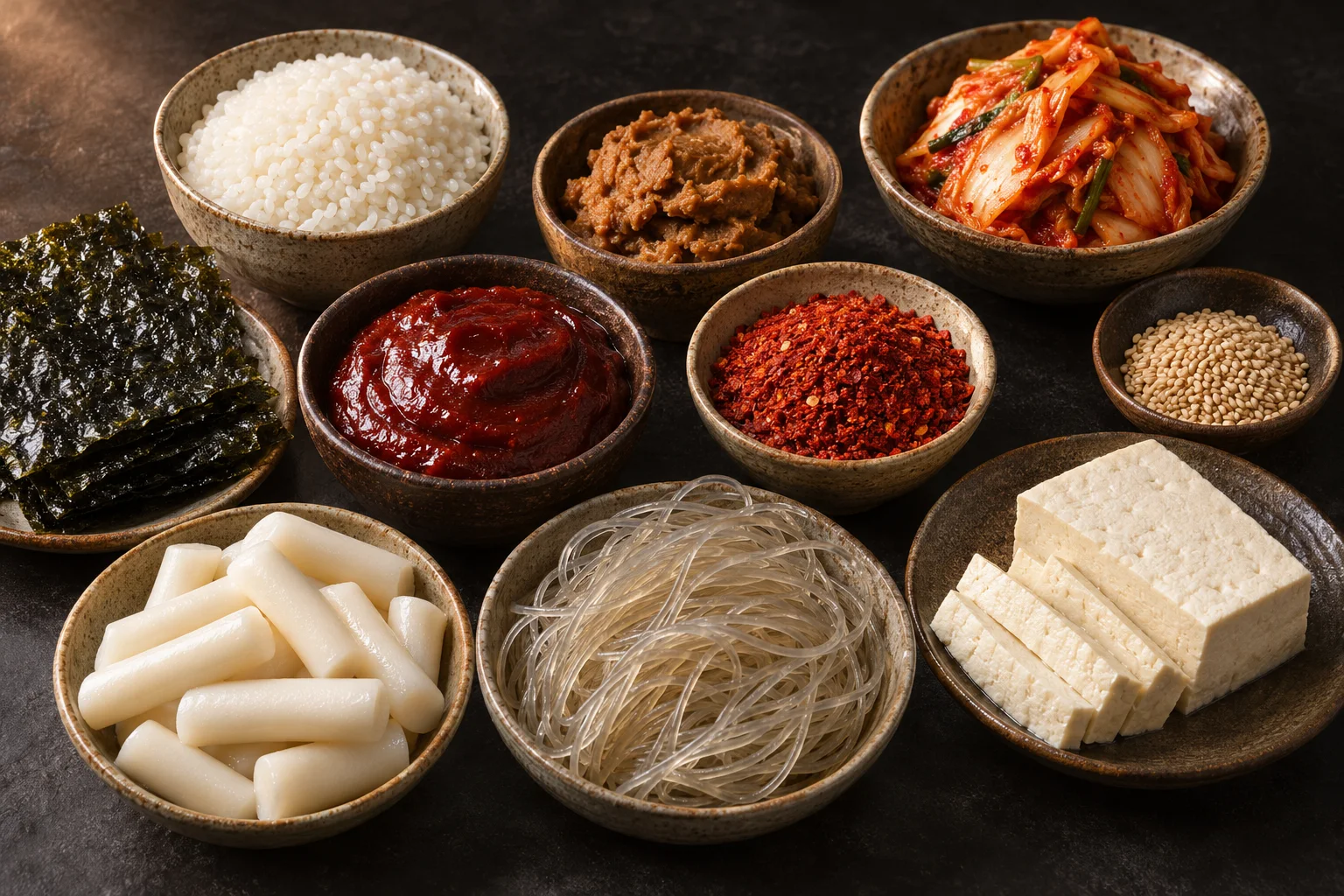
You don’t need thirty specialty products to start cooking Korean food. A small, carefully chosen set of ingredients is enough for bibimbap, kimchi fried rice, japchae and tteokbokki. The key is knowing what each one contributes: heat, savoury depth, acidity, texture or the unmistakable aroma of toasted sesame.
This guide introduces 12 practical Korean pantry essentials, with Korean names, everyday uses, storage advice and shopping tips. It is a starting point for home cooks in Germany, not a claim that every Korean household uses exactly the same twelve items.
Short answer: If you are buying just five things, start with gochujang, soy sauce, toasted sesame oil, short-grain rice and kimchi. Add gochugaru and doenjang when you begin making spicy stews and traditional vegetable side dishes.
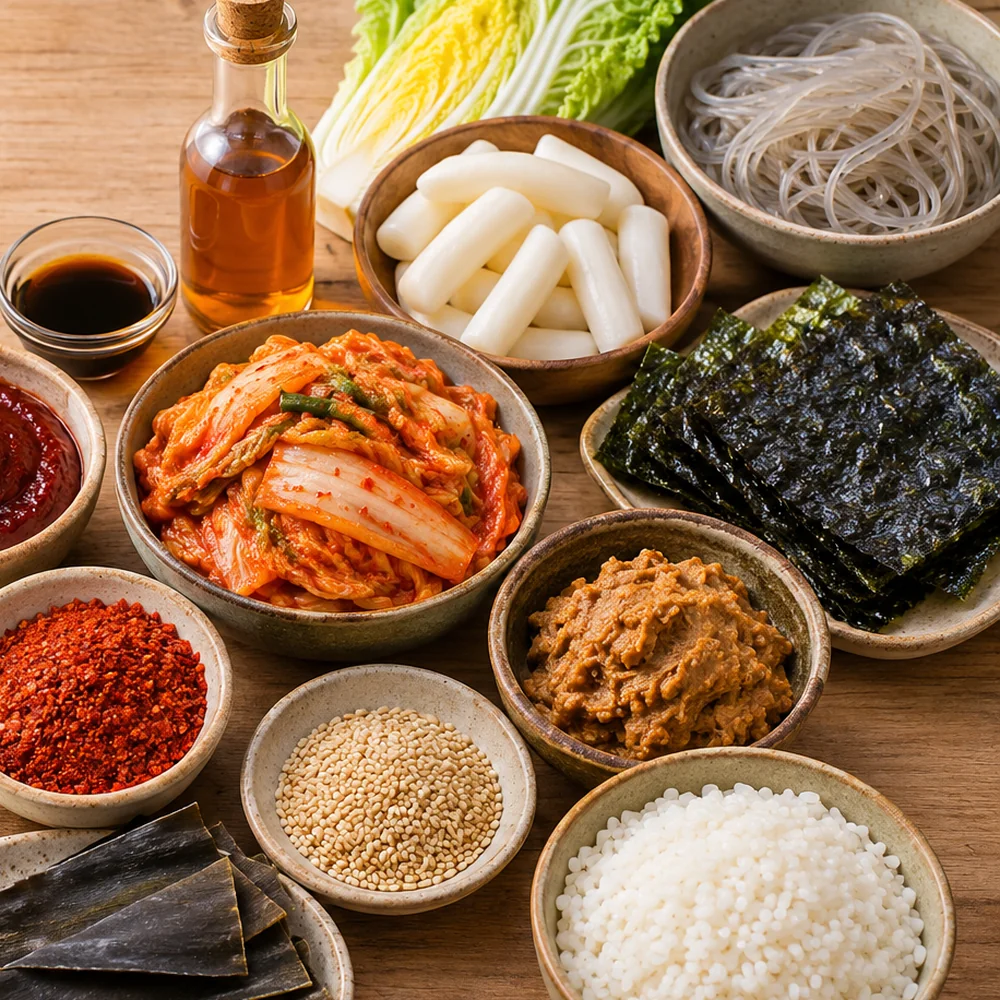
The 12 essentials at a glance
| Ingredient | Korean | Main role | Good for |
|---|---|---|---|
| 1. Gochujang | 고추장 | Fermented spicy-sweet paste | Bibimbap sauce, marinades, tteokbokki |
| 2. Gochugaru | 고춧가루 | Red chilli flakes, colour and heat | Kimchi, stews, seasoning sauces |
| 3. Doenjang | 된장 | Deep fermented soybean flavour | Doenjang jjigae, soups |
| 4. Ganjang | 간장 | Soy sauce: salt and umami | Marinades, dips, vegetables |
| 5. Chamgireum | 참기름 | Fragrant toasted sesame oil | Bibimbap, japchae, banchan |
| 6. Bokkeun-kkae | 볶은 깨 | Toasted sesame seeds | Rice, salads, side dishes |
| 7. Ssal | 쌀 | Rice: the meal’s foundation | Bibimbap, kimchi fried rice |
| 8. Kimchi | 김치 | Tangy fermented vegetables | Side dishes, stews, fried rice |
| 9. Gim | 김 | Thin edible seaweed sheets | Gimbap, rice topping, snacks |
| 10. Tteok | 떡 | Chewy rice cakes | Tteokbokki, soups |
| 11. Dangmyeon | 당면 | Usually sweet-potato starch noodles | Japchae, stews |
| 12. Tofu | 두부 | Mild soy food that absorbs seasoning | Braised tofu, soups, bibimbap |
The flavour foundation: pastes, chilli and soy sauce
1. Gochujang (고추장): fermented red chilli paste
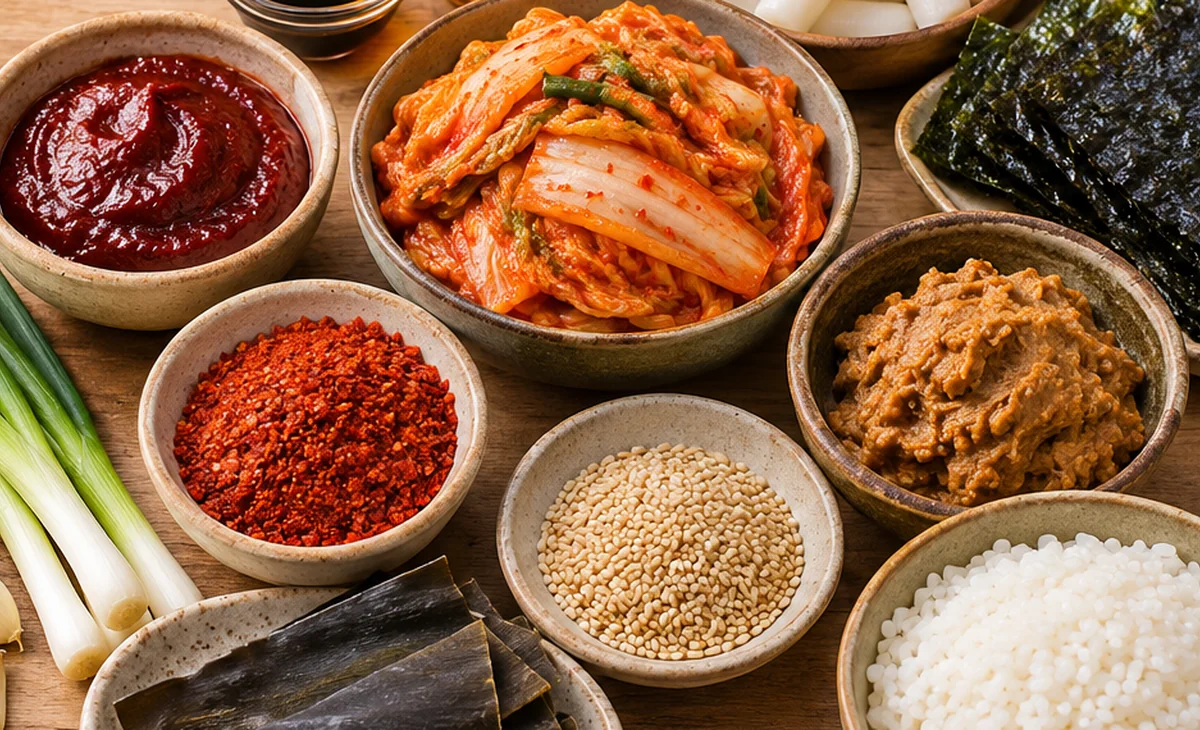
Gochujang is thick, red and richly flavoured. It combines heat, a little sweetness and savoury fermented depth. Often a teaspoon goes a long way. Stir it into a quick bibimbap dressing with a little water, soy sauce and sesame oil. It also forms the base of many tteokbokki sauces and marinades. Shopping tip: Buy a small tub first and check the ingredient list, especially if wheat or other allergens are a concern. Learn more in the gochujang ingredient guide.
2. Gochugaru (고춧가루): Korean red pepper flakes
Gochugaru is not a paste. It consists of dried ground chilli, available in different textures and heat levels. Coarser flakes are commonly used when making kimchi; finer products work well in certain sauces. Ordinary chilli powder may have a completely different heat and flavour profile. If you are new to Korean cooking, buy a modest amount for a dish you already plan to make.
Gochujang and gochugaru serve different purposes. Compare their flavour, uses and substitutes.
3. Doenjang (된장): fermented soybean paste
Doenjang brings earthy, salty, fermented richness to soups, stews, dips and vegetable dishes. Its signature dish is doenjang jjigae, often made with vegetables and tofu. Although Japanese miso can work as a practical stand-in in some recipes, it isn’t identical: the production methods, textures and flavour profiles vary. Start with a little and follow the packaging’s storage instructions after opening.
4. Ganjang (간장): which Korean soy sauce?
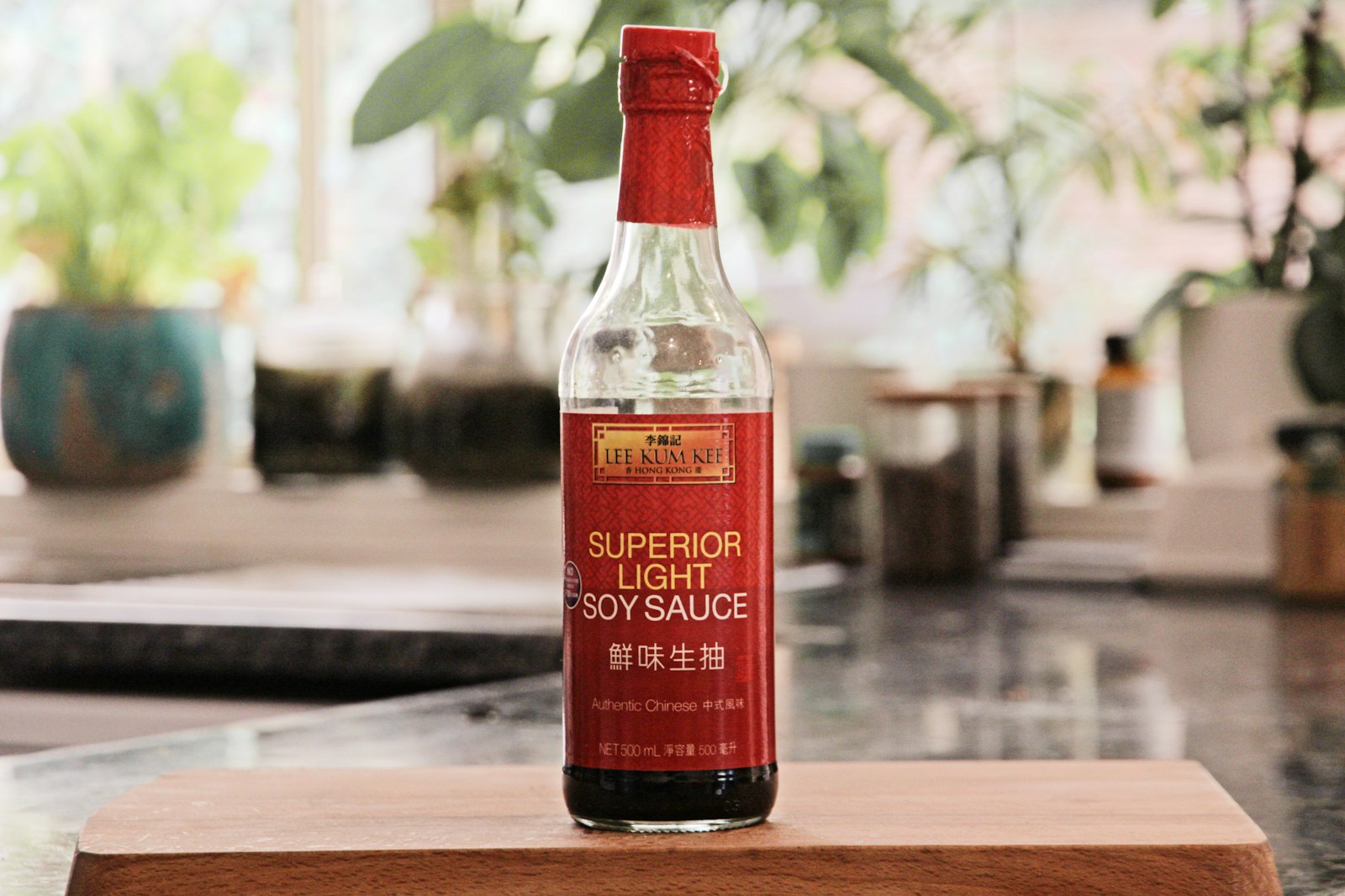
Not all Korean soy sauce is used in the same way. A versatile brewed soy sauce (yangjo-ganjang, 양조간장) suits marinades, dips and everyday stir-fries. Soup soy sauce (guk-ganjang, 국간장) is often lighter in colour but saltier, so it needs different amounts. For a beginner pantry, one dependable everyday soy sauce is enough. Add speciality varieties when a specific recipe calls for them. See the soy sauce guide for more context.
Sesame aromas, rice and fermented vegetables
5. Chamgireum (참기름): toasted sesame oil
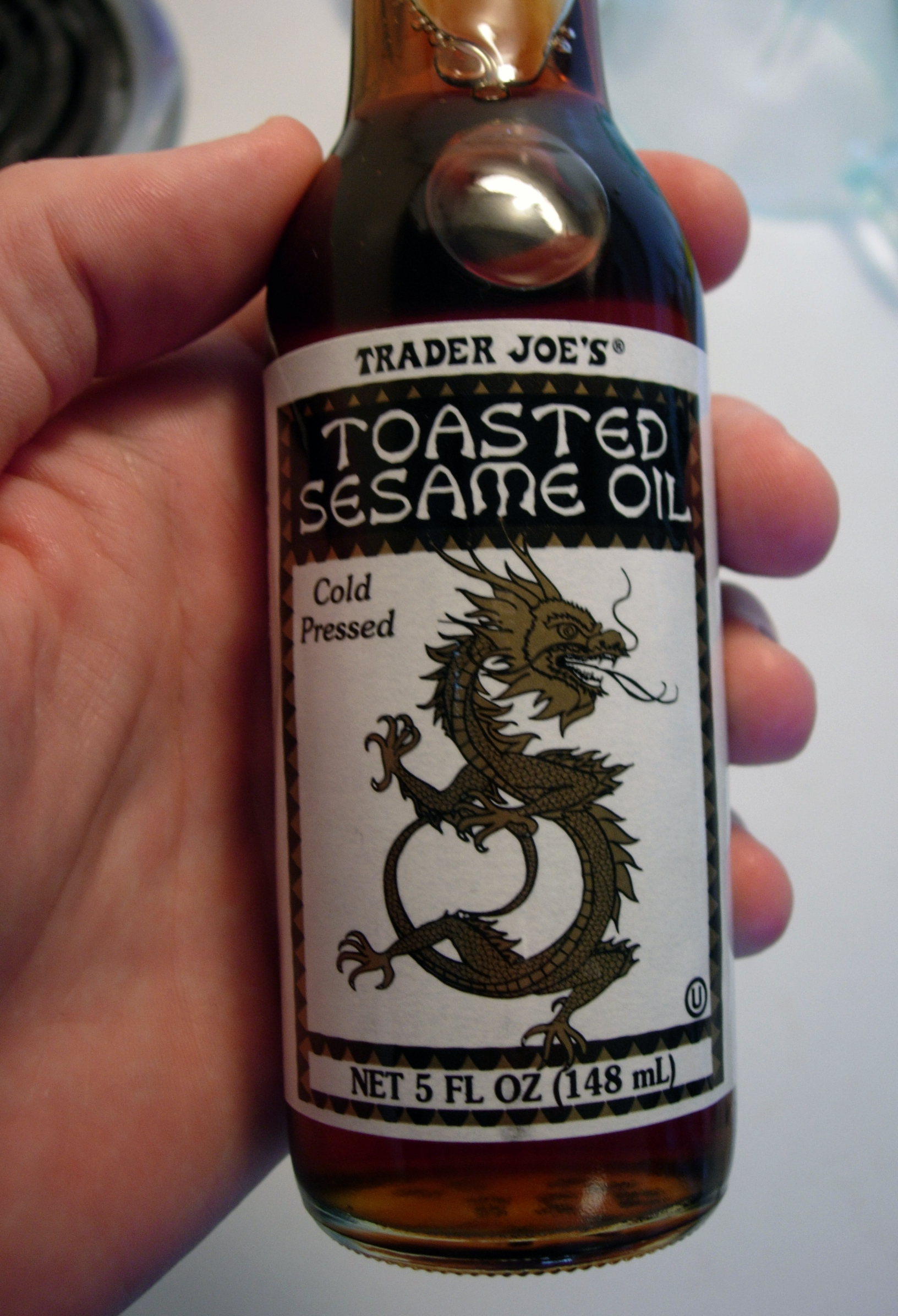
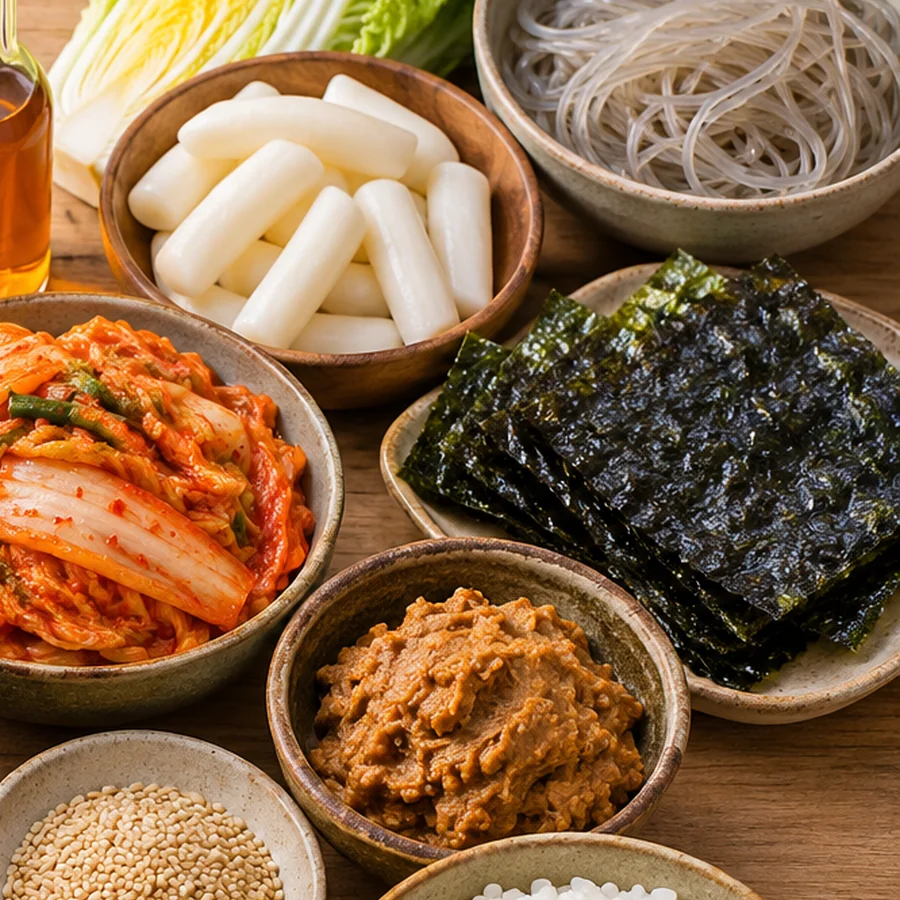
Just a few drops of toasted sesame oil can give rice, vegetables and noodles a deep, nutty aroma. It isn’t the same as neutral, untoasted sesame oil. In many Korean dishes it is used to finish or season food, rather than as the main high-heat frying oil. Look for “toasted” on the label and store it as directed by the producer. About sesame oil.
6. Bokkeun-kkae (볶은 깨): toasted sesame seeds
Toasted sesame seeds add gentle crunch and a warm, nutty flavour. Sprinkle them over bibimbap, spinach banchan or japchae. If your seeds are raw, toast them briefly in a dry pan over moderate heat, stirring and watching carefully. Sesame is a regulated food allergen in the EU, so always check packaging and ask guests about allergies.
7. Ssal (쌀): short- or medium-grain rice
Everyday Korean meals often feature short- or medium-grain rice that holds together slightly when cooked. That texture works beautifully in bibimbap and rice bowls. Sushi rice can be a useful substitute, but you do not need sushi vinegar seasoning. Jasmine rice is edible with the same dishes, of course, although the texture will differ. Cool cooked rice promptly, refrigerate it and reheat it safely.
8. Kimchi (김치): fermented vegetables
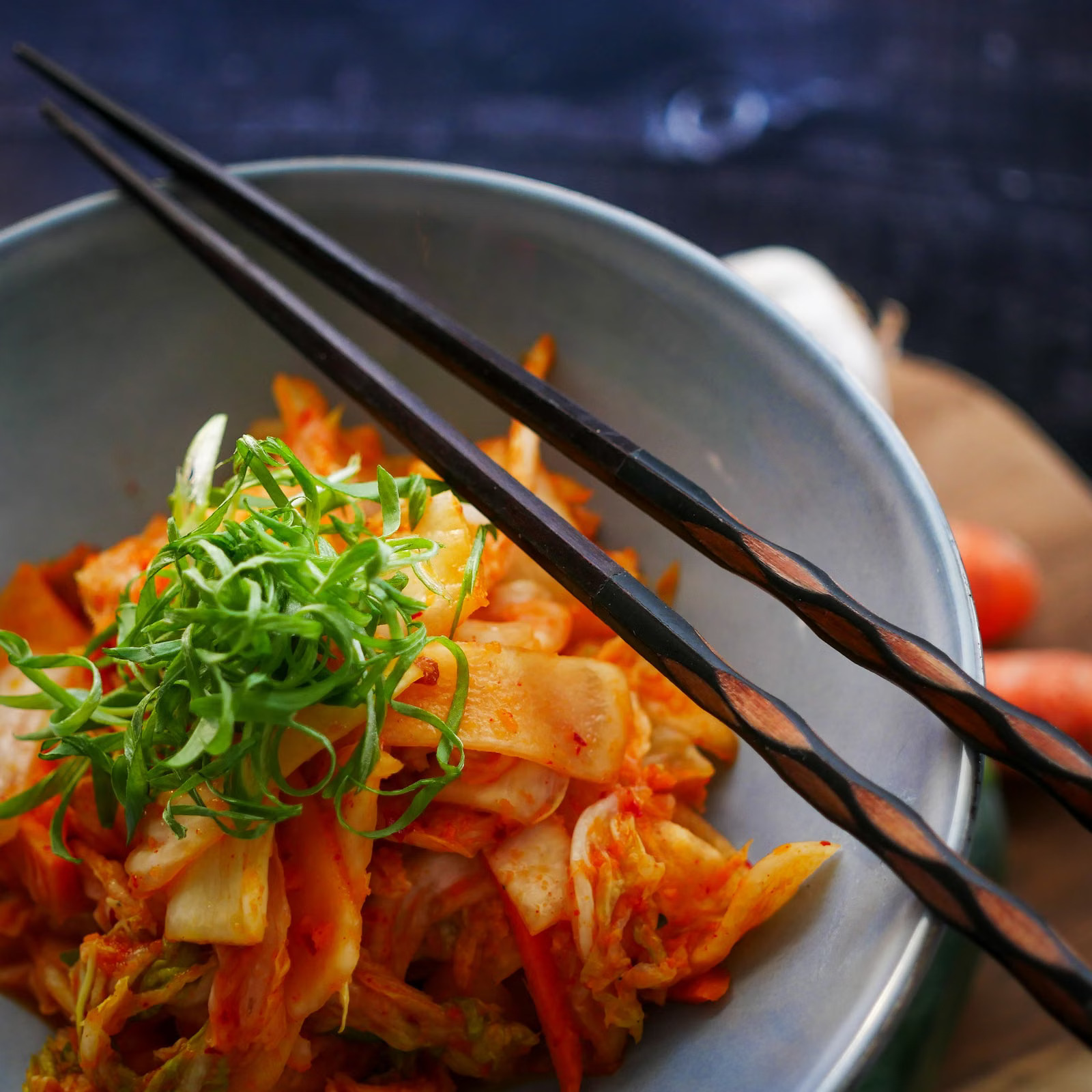
Kimchi is a broad family of fermented vegetable dishes. Napa cabbage kimchi, or baechu-kimchi, is the most familiar type. Depending on its age and seasoning, it can be crisp, sour, spicy and intensely savoury. Younger kimchi is excellent as a side dish; more mature kimchi is often ideal for stews and fried rice. Not all kimchi is vegetarian: fish sauce or salted seafood may be present. Store opened kimchi tightly closed in the fridge. Find more in our kimchi guide.
Seaweed sheets, noodles and broth basics
9. Gim (김): thin edible seaweed sheets
Gim refers to thin edible seaweed sheets. Plain, unseasoned sheets are a good choice for rolling gimbap. Seasoned seaweed snack sheets are often smaller and coated with oil and salt: delicious over rice, but not the same thing for making rolls. Keep opened packages dry and sealed so the sheets remain crisp.
10. Tteok (떡): Korean rice cakes
Korean rice cakes come in many shapes. Tteokbokki generally uses elongated cylindrical pieces called garaetteok. Their pleasantly chewy texture is completely different from the thin rice-paper wrappers used for summer rolls. Tteok may be sold shelf-stable, chilled or frozen, depending on the product. Follow the package for storage, soaking and cooking times; they aren’t all prepared the same way.
11. Dangmyeon (당면): Korean glass noodles
Dangmyeon are usually made from sweet-potato starch and are central to japchae. Once cooked, they become translucent, slippery and springy. They aren’t rice noodles, and not all clear noodles are the same: some are made from mung-bean or pea starch. Check the ingredient list and follow the product’s cooking instructions. An easy first dish is japchae with mushrooms, carrots, spinach and soy sauce.
12. Tofu (두부): a flexible protein
Firm tofu browns well in a pan or braises in savoury sauce; soft tofu suits soup. Its mild flavour takes on soy sauce, gochujang or doenjang. For a simple side, brown 300 g sliced firm tofu and simmer briefly with 2 tbsp soy sauce and 80 ml water. Follow the pack for chilled storage after opening and use promptly. Tofu contains soy. Plain firm tofu from an ordinary supermarket is a practical substitute for a Korean brand.
What should you buy first?
You do not need all twelve items immediately. Build your shopping list around the dishes you actually want to cook:
- Starter set — five basics: Gochujang, everyday soy sauce, toasted sesame oil, short-grain rice and kimchi.
- Spicy-food extension: Add gochugaru and tteok.
- Soup and stew extension: Add doenjang and tofu.
- Japchae and rice-roll extension: Add dangmyeon, gim and toasted sesame seeds.
Fresh ingredients outside this pantry list: Garlic, spring onions, onions, ginger, carrots, cabbage, mushrooms, spinach, and tofu, eggs or meat depending on the dish.
Three easy dishes you can already make
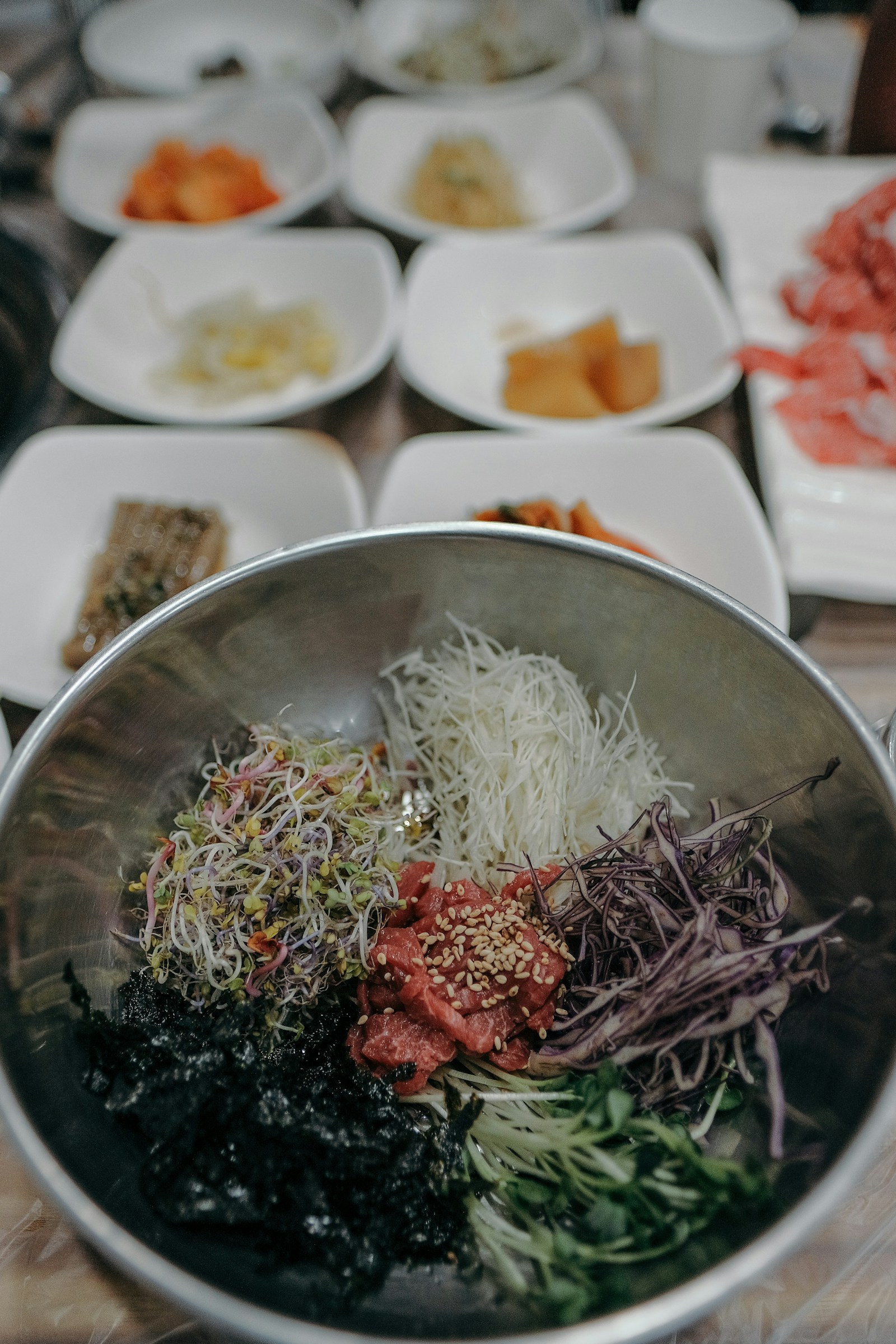
Bibimbap: Combine cooked rice, sautéed vegetables, and an egg or tofu if you like. Serve with a quick dressing of gochujang, soy sauce, water and toasted sesame oil. Bibimbap recipe.
Kimchi fried rice: Stir-fry promptly chilled leftover rice with kimchi, season with a little soy sauce and finish with sesame and gim. Explore Korean recipes.
Tteokbokki: Simmer rice cakes in a sauce based on gochujang, a little gochugaru, water or stock, and a small amount of sweetness. More recipes.
Buying Korean ingredients in Ingolstadt
At Asia Markt Thien Tam, Am Dachsberg 2, 85049 Ingolstadt, you can ask about ingredients for Korean recipes and submit a non-binding pickup enquiry based on your shopping list. The range, individual brands and chilled or frozen items may change. The shop will confirm availability and collection details before anything is prepared; the enquiry is not an online purchase.
Opening hours (as of 10 November 2026): Monday–Saturday, 10:00–19:30. Phone: 0841 9678693.
Ask about ingredients and pickup · Browse ingredients · Explore recipes
Frequently asked questions
What’s the difference between gochujang and gochugaru?
Gochujang is a thick fermented chilli paste with seasoning and some sweetness. Gochugaru is dried ground chilli. You cannot swap them 1:1 because they have different textures and flavour components.
Is Korean food always spicy?
No. Many side dishes, rice dishes and egg preparations are mild. Some chilli-based dishes can be adjusted, although reducing the chilli will change their characteristic flavour.
Are kimchi and gochujang vegan?
Not necessarily. Kimchi may include fish sauce or salted seafood. Gochujang recipes vary by manufacturer. Always read labels for vegan suitability and allergens.
Can I replace doenjang with Japanese miso?
In some soups, yes, but the result will taste different. Use a modest amount and adjust salt to taste.
Do all twelve items need to be Korean brands?
No. Rice, sesame seeds and basic vegetables can often come from other producers. For gochujang, gochugaru, tteok and dangmyeon, choosing the correct type of product matters more than a famous logo.
Related guides: Gochujang · Kimchi · Sesame oil · Asian pantry starter guide