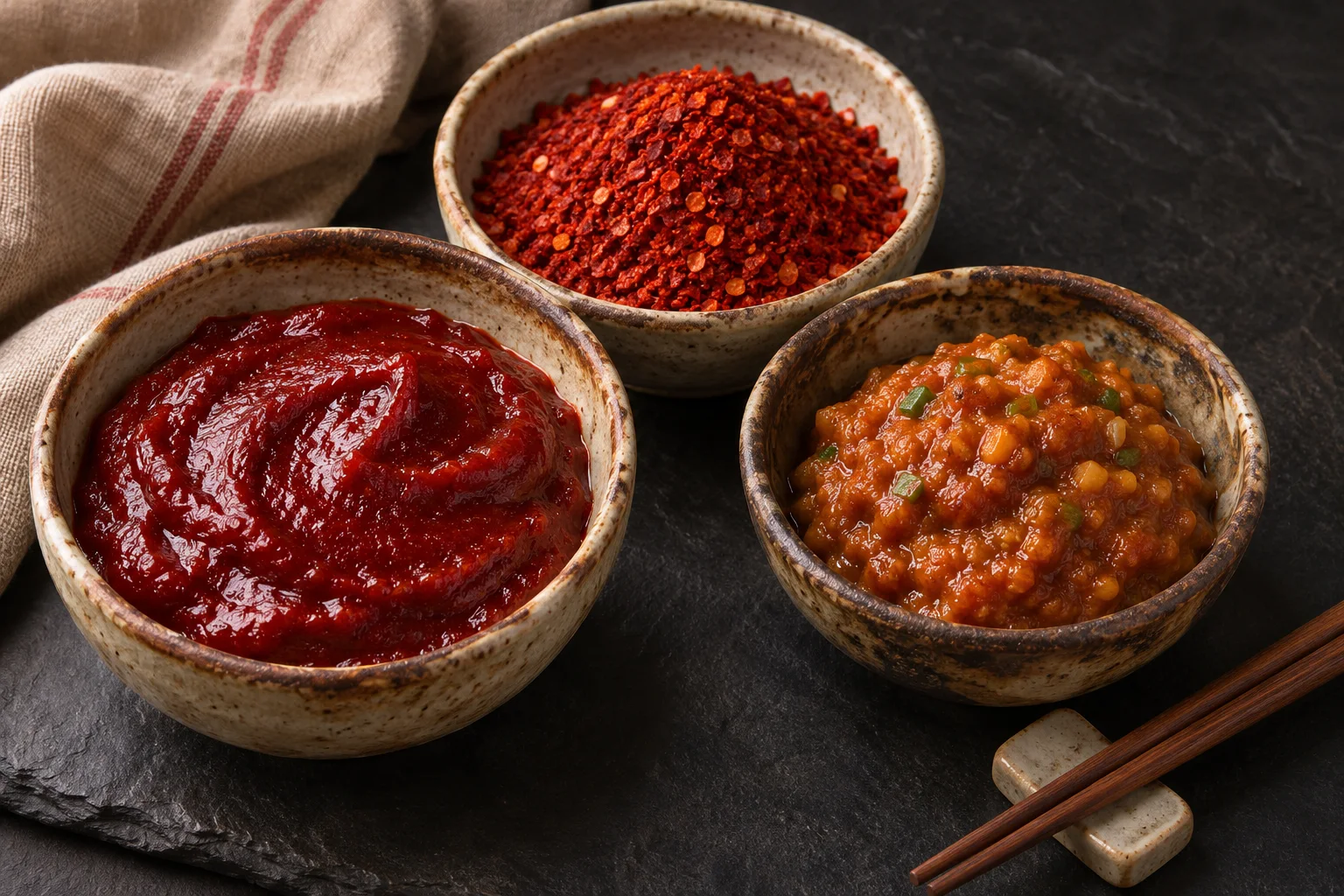
You are getting ready to make tteokbokki, kimchi or bibimbap, and your recipe calls for gochujang (고추장) or gochugaru (고춧가루). Both are red, both are essential to many Korean dishes, and their names look surprisingly alike. But they play very different roles in the kitchen.
The short answer: Gochujang is a thick fermented Korean chilli paste with heat, sweetness, saltiness and savoury depth. Gochugaru is dried Korean chilli, sold as flakes or powder, which contributes pepper flavour, vibrant colour and heat. You cannot swap them spoon-for-spoon.
Quick comparison: gochujang vs. gochugaru
| Question | Gochujang (고추장) | Gochugaru (고춧가루) |
|---|---|---|
| What is it? | Fermented Korean chilli paste | Ground dried Korean red chilli |
| Texture | Thick, sticky and moist | Dry: coarse flakes or finer powder |
| Flavour | Spicy, slightly sweet, salty, fermented and umami-rich | Pepper-forward, often fruity, mild to hot depending on product |
| Typical ingredients | Chilli, grain or starch, fermented soy, salt; recipes vary | Usually dried red chilli; check the label |
| Best for | Bibimbap sauce, tteokbokki, glazes, marinades | Kimchi, stews, side dishes, spice mixes |
| Does it thicken sauces? | Yes, the paste adds body | Not in the same way as a paste |
| Storage after opening | Follow the label; usually refrigerated | Airtight away from heat and moisture; fridge/freezer can help preserve quality |
1. What exactly is gochujang?
Gochujang is a traditional Korean seasoning paste made with chilli, grain-derived ingredients and fermented soybeans. Fermentation helps create complex sweet and savoury notes. Commercial tubs differ in heat level, sweetness, salt content and the ingredients they use.
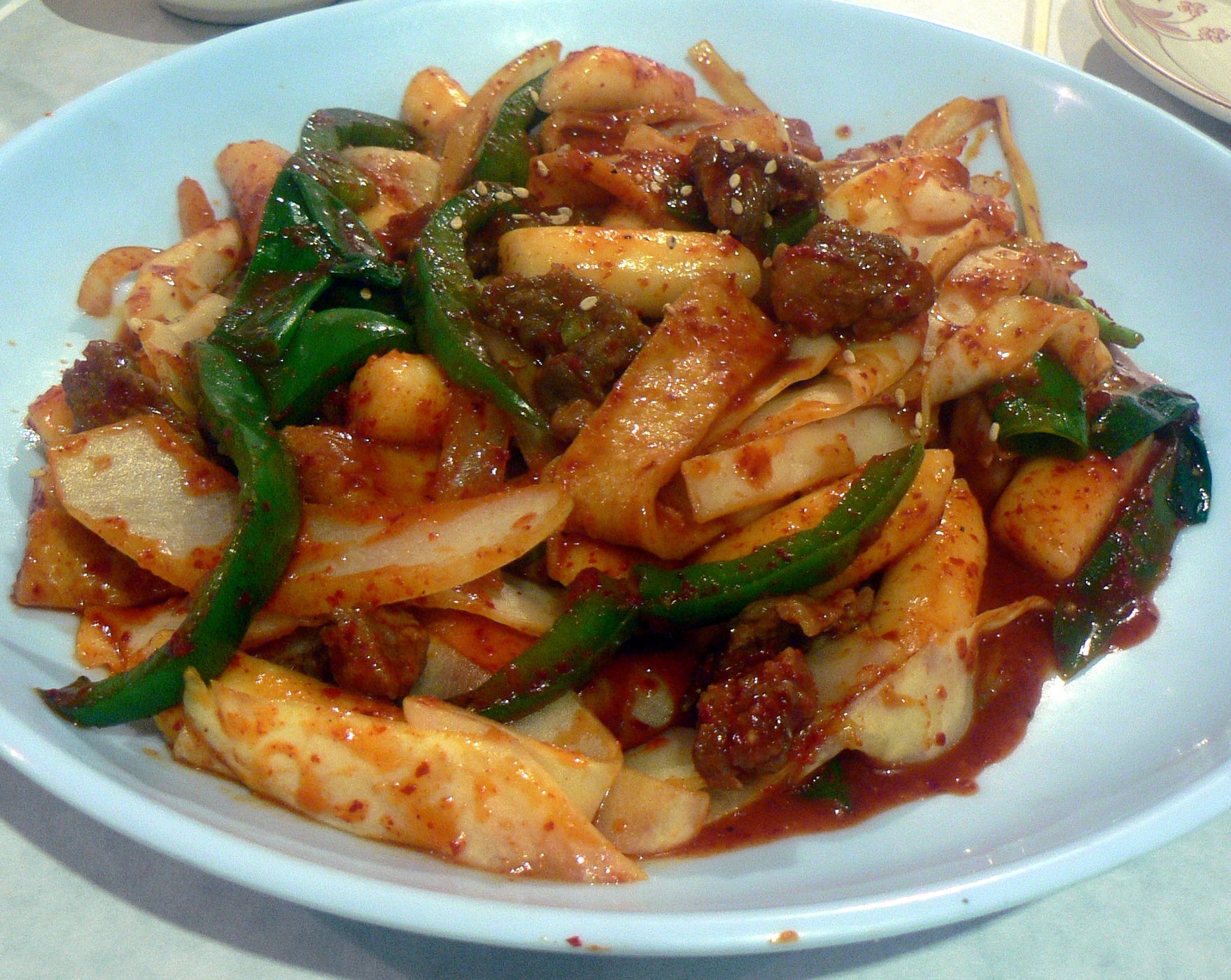
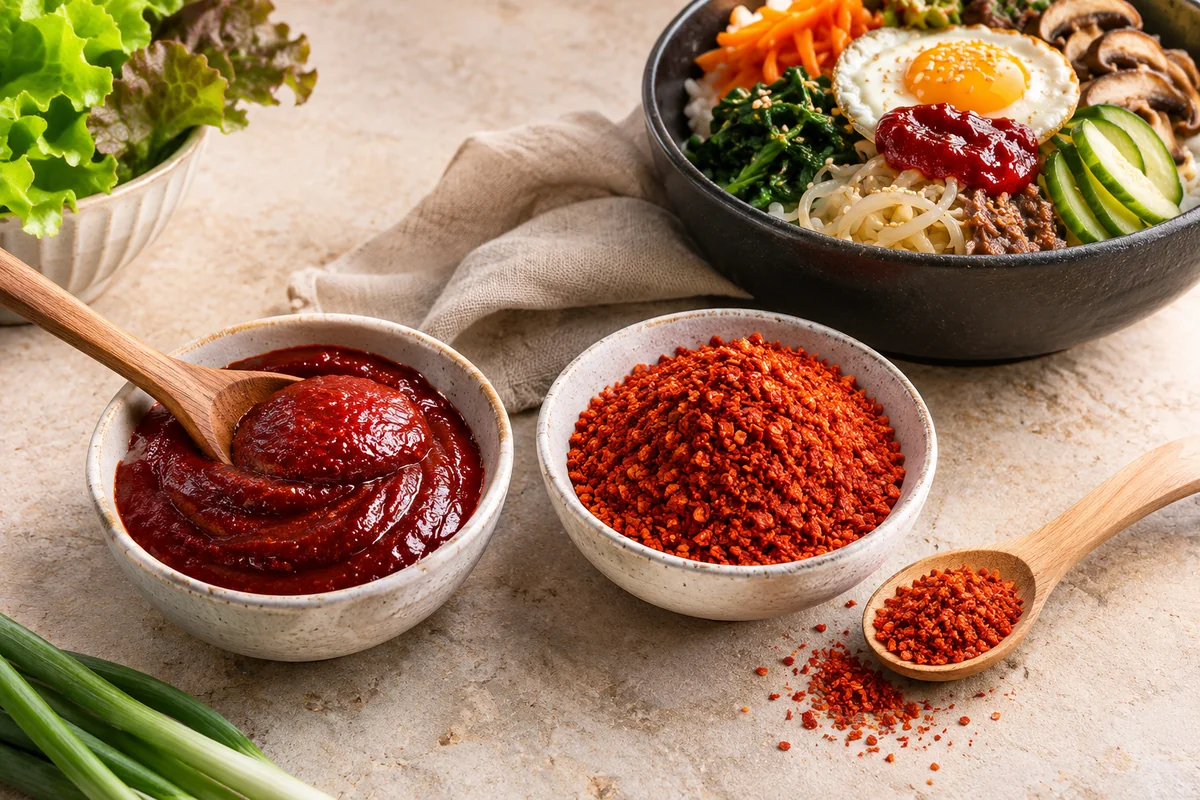
It has a deep red colour and a sticky, spoonable texture. Stir it with water, vinegar, sesame oil or soy sauce to make a dressing for bibimbap. It also helps form the glossy, spicy sauce of tteokbokki. The sauce clings to rice cakes because gochujang brings much more than powdered chilli.
Shopping tip: Look for Gochujang, Korean Red Pepper Paste or 고추장 on a tub or jar. Read the ingredient and allergen statements, especially for soy and wheat. Do not assume that every product is gluten-free or vegan. For more detail, see our gochujang ingredient guide; Codex should resolve the translated URL if the site has one.
2. What exactly is gochugaru?
Gochugaru is dried Korean red chilli ground to flakes or powder. Unlike paste, it is a dry ingredient that disperses through a dish without adding the paste’s sweetness, salt or fermented richness. It is central to many types of kimchi and is frequently used in stews, seasoned vegetables and chilli-based sauces.
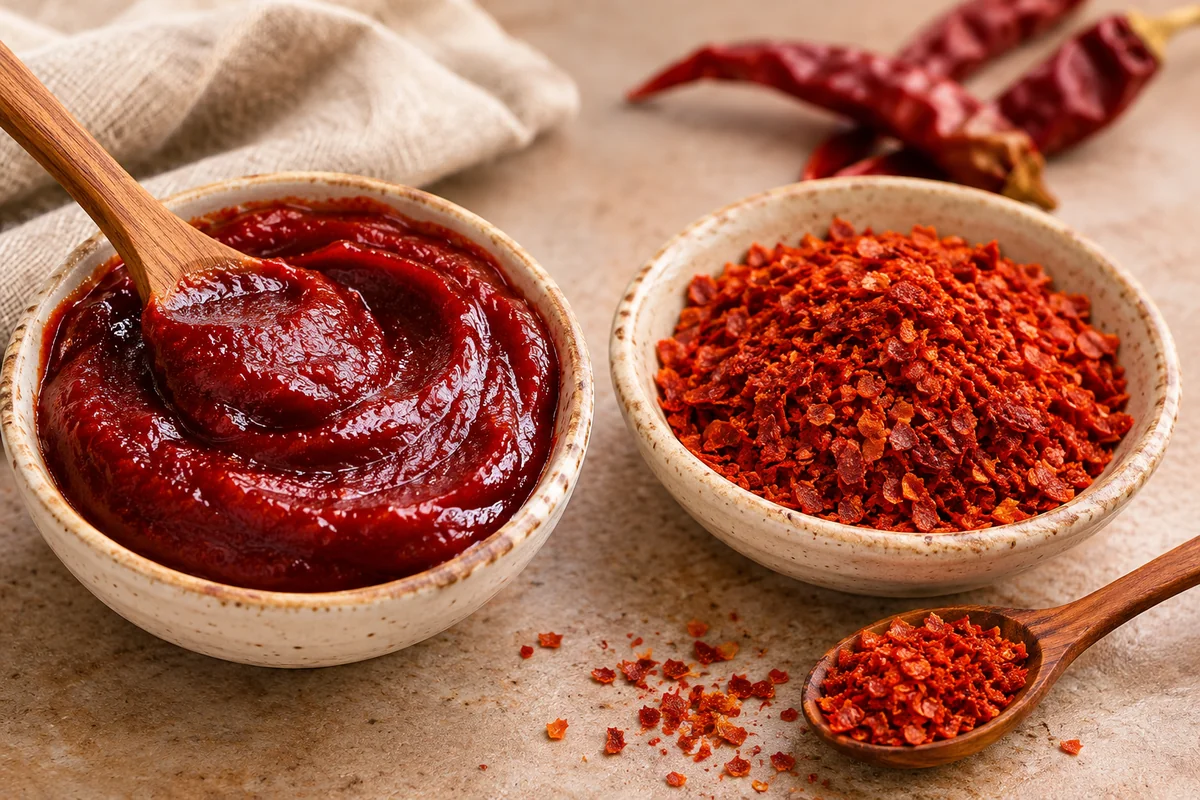
You may find coarse flakes and fine powder. Coarser products are often chosen for napa-cabbage kimchi; finer varieties may be used for pastes and particular seasonings. Heat varies with the pepper variety and product. Packaging can say 고춧가루, Korean Red Pepper Flakes, Red Pepper Powder or Kimchi Chili Powder. The English word powder does not always mean a fine, dusty texture, so inspect the flakes if possible.
Generic supermarket chilli flakes aren’t necessarily the same thing. They may contain different peppers, more seeds or a noticeably different heat level and flavour.
3. Which one is spicier?
Neither is always hotter. Gochugaru contains concentrated dried chilli, but mild varieties exist. Gochujang blends chilli with grain, fermented ingredients and salt, often with sweetness that rounds out the bite. Some commercial gochujang products are still very hot.
That means a single Scoville number cannot reliably compare the two ingredients. Check the actual product’s heat label and start with a small amount in your dish.
Reducing the heat: For tteokbokki, use a milder gochujang and reduce or omit added gochugaru. For kimchi, consider a mild gochugaru variety rather than removing most of the pepper without checking the recipe: chilli affects appearance and flavour as well as heat.
4. Which ingredient belongs in which Korean dish?
| Dish | Usually choose | Reason |
|---|---|---|
| Bibimbap dressing | Gochujang | Creates a sweet-savoury fermented sauce |
| Tteokbokki | Gochujang, sometimes extra gochugaru | Paste adds body; flakes add chilli depth and colour |
| Baechu kimchi (napa cabbage) | Gochugaru | Provides the familiar red pepper seasoning; use a tested fermentation recipe |
| Kimchi jjigae | Often gochugaru, sometimes gochujang depending on recipe | Different balance of chilli flavour and seasoning |
| Spicy glaze or marinade | Often gochujang | Coats ingredients and adds savoury sweetness |
| Spicy cucumber side dish | Often gochugaru | Seasons vegetables without a heavy sweet paste |
There are regional and family variations. Ask what the recipe needs the ingredient to do, rather than deciding by its colour alone.
5. Can I substitute one for the other?
Not at a 1:1 ratio. The ideas below are emergency workarounds, not exact replacements for Korean ingredients.
If you need gochujang but only have gochugaru
For a quick improvised sauce—not traditionally fermented gochujang—try mixing:
- 1 tsp mild gochugaru
- 1 tsp light miso for salty savoury depth
- ½–1 tsp sugar or rice syrup
- 1–2 tsp water, adjusted until spreadable
Taste and adjust. This mixture does not automatically replace one tablespoon of gochujang; add it gradually to your dish. Check the miso’s allergen label. It may work in a simple cooked sauce, but the fermentation profile and texture will be different.
If you need gochugaru but only have gochujang
In a cooked sauce, a little paste may be usable if you reduce the recipe’s added sugar, salt and liquid. For kimchi fermentation or a dry spice blend, gochujang is generally a poor substitute: the extra moisture, sugar and salt change the formula.
If neither ingredient is available
- For gochugaru: Combine sweet paprika with a tiny amount of ordinary chilli flakes, then taste. The colour, chilli flavour and heat won’t be identical. Genuine gochugaru remains preferable for kimchi.
- For gochujang: Mix a little miso, mild chilli and sugar or rice syrup. This can resemble some of the sweet-salty heat, but it isn’t Korean fermented chilli paste.
Sriracha and sambal oelek also have different acidity, flavour and texture. Don’t substitute them blindly by the spoonful.
6. Two mini kitchen tests to understand the difference
Test A — quick bibimbap dressing (about two bowls): Mix 1 tbsp gochujang, 1 tsp toasted sesame oil, 1 tsp rice vinegar and 1–2 tsp water. Add sugar only if needed. The result is a thick, savoury dressing. Exact heat depends on the product.
Test B — simple spicy cucumber side dish (one small serving): Thinly slice ½ cucumber and toss with ½ tsp gochugaru, 1 tsp rice vinegar, ½ tsp soy sauce and a few drops of sesame oil. Let it sit briefly and taste. The flakes season the vegetables without turning them into a thick, sweet paste sauce. This is an easy demonstration, not a claim to be a canonical family recipe.
7. Buying and storing Korean chilli products
- For kimchi: Choose gochugaru with the grind size and heat level your recipe asks for. A small bag is sensible for beginners.
- For bibimbap or tteokbokki: A small tub of gochujang goes a long way. Compare heat and ingredient labels.
- For storage: Keep gochujang tightly closed and follow the maker’s instructions, usually refrigerating after opening; always use a clean utensil. Seal gochugaru airtight and protect it from humidity, light and warmth. Refrigerating or freezing it in a well-sealed bag can help preserve quality.
- For dietary requirements: Gochujang may contain soy, wheat or other allergens. Pure gochugaru is usually dried chilli, but labels and cross-contact warnings still matter. Don’t assume every Korean sauce or kimchi is vegan.
8. Finding ingredients in Ingolstadt
A small tub of gochujang and a modest bag of gochugaru will take you a long way. You can ask about Korean ingredients at Asia Markt Thien Tam, Am Dachsberg 2, 85049 Ingolstadt. Brands and stock may change; please confirm availability before making a special trip.
- Learn more about gochujang
- See the bibimbap recipe
- See the tteokbokki recipe
- Send a non-binding pickup enquiry
Starter shopping list: Small tub of gochujang, bag of gochugaru in the preferred heat/grind, sesame oil, soy sauce, rice and vegetables for the recipe you plan to cook. A pickup enquiry is not a confirmed order; the shop will verify availability first.
Frequently asked questions
Is gochugaru just chilli powder?
It is dried Korean red chilli in either a coarser or finer grind. Generic chilli powder may use other pepper varieties and have a very different flavour and heat level.
Is gochujang fermented?
Traditional gochujang is a fermented condiment. Commercial formulations and manufacturing methods vary, so check the specific product label.
Can I make kimchi with gochujang instead of gochugaru?
That is generally not a good substitute for a traditional kimchi recipe. The paste changes the balance of moisture, salt and sugar. Use gochugaru and follow a trusted fermentation recipe whenever possible.
Are gochujang and gochugaru equally spicy?
No. Heat varies widely among products. Gochugaru ranges from mild to hot; gochujang also contains ingredients that change how its heat tastes. Add a little first and adjust.
Which should a beginner buy first?
Choose gochujang for bibimbap dressing, tteokbokki and marinades. Choose gochugaru for kimchi, spicy stews and seasoned vegetable dishes. Frequent Korean home cooks will find uses for both.
Explore all 12 Korean pantry essentials
What is ssamjang?
Ssamjang (쌈장) is a seasoned dipping paste commonly combining doenjang and gochujang with garlic, sesame oil or other seasonings. It is salty, fermented and sometimes slightly sweet; heat varies by brand. It is moist and ready to use as a dip, unlike dry gochugaru, and generally tastes more of soybeans than plain gochujang.
| Product | Texture | Heat | Best use |
|---|---|---|---|
| Gochujang | Thick red paste | Varies | Sauces and marinades |
| Gochugaru | Dry flakes | Varies | Kimchi and seasoning |
| Ssamjang | Thick seasoned dip | Usually mild to medium, product-dependent | Lettuce wraps and vegetables |
Fast dip: stir 1 tbsp ssamjang with 1 tsp water and ½ tsp sesame oil. Simple marinade: mix 1 tbsp gochujang, 1 tbsp soy sauce, 1 tbsp water and 1 tsp sugar. Ssamjang may stand in for gochujang in a dip, but the salt, sweetness and soybean flavour change. Check labels for soy, wheat and sesame.