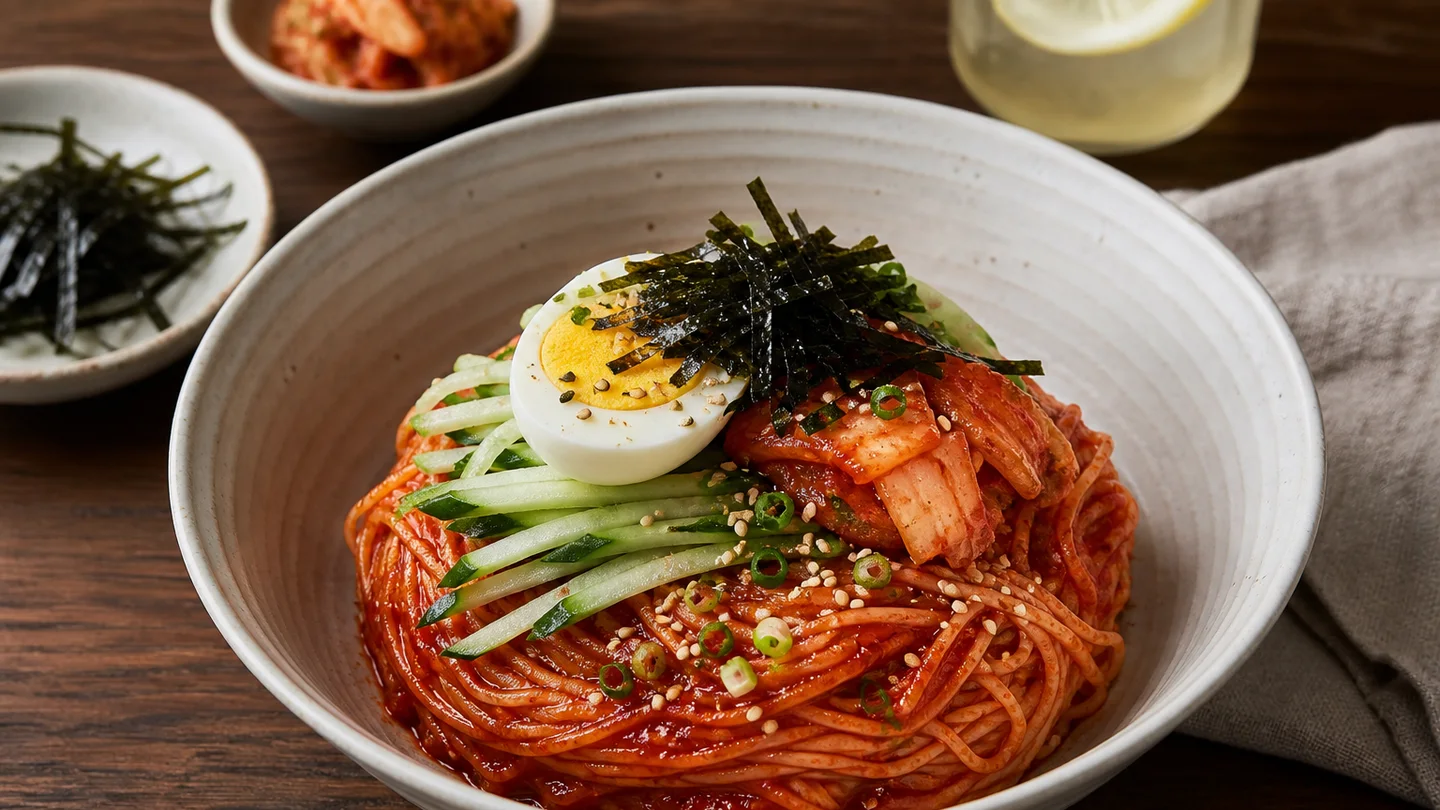
Bibim guksu are Korean noodles cooked quickly, rinsed ice-cold and tossed with a sweet, spicy and tangy gochujang sauce. Cucumber, kimchi, sesame and egg make them a refreshing twenty-minute summer meal.
At a glance
- Time: 20 minutes
- Yield: 2 servings
- Taste: spicy, sweet, tangy and nutty
- Important: rinse the noodles very thoroughly in cold water
Ingredients
- 200 g thin Korean wheat noodles, somyeon
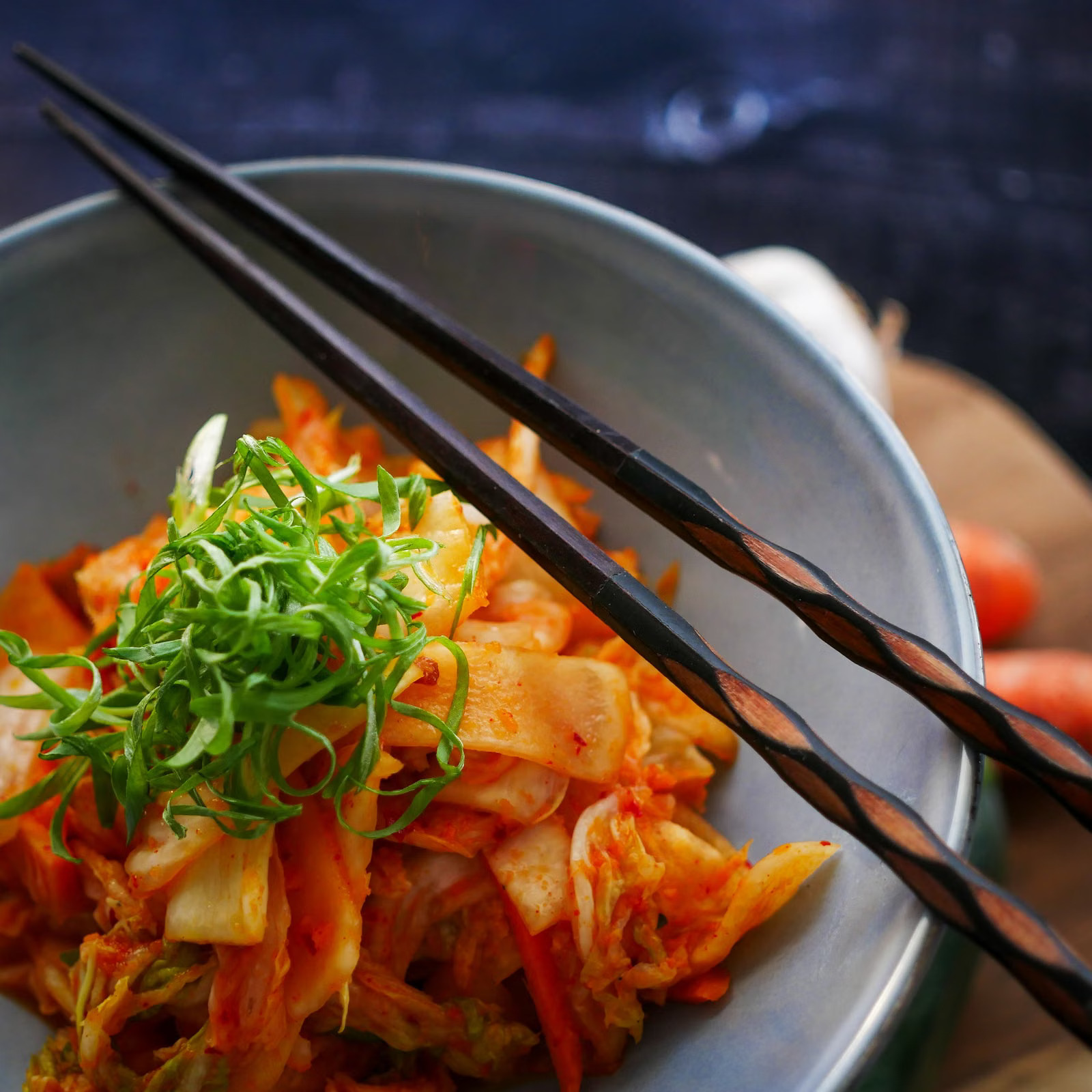
- 100 g kimchi, roughly chopped
- 2 tbsp kimchi juice
- 1 1/2 tbsp gochujang
- 1 1/2 tbsp rice vinegar
- 1 tbsp soy sauce
- 1 tbsp sugar, honey or rice syrup
- 1 tbsp toasted sesame oil
- 1 small garlic clove, finely grated
- 1/2 cucumber
- 1 boiled egg
- 1 tbsp toasted sesame seeds
- optional: nori strips and spring onion
Method
- Mix the sauceWhisk gochujang, kimchi juice, rice vinegar, soy sauce, sweetener, sesame oil and garlic in a large bowl.
- Prepare the toppingsCut cucumber into fine matchsticks, halve the egg and prepare the kimchi, nori and spring onion.
- Cook the noodlesCook somyeon according to the packet. They usually cook very quickly and should not become soft.
- Rinse ice-coldTip into a sieve and move the noodles with your hands under cold running water until completely cold and no longer starchy. Drain well.
- TossAdd noodles and kimchi to the sauce and mix evenly.
- ServeDivide immediately between two bowls and top with cucumber, egg, sesame and nori.
Tips and variations
- Start with 2 tsp gochujang and add more after tasting. Extra cucumber, egg and a little additional sweetness soften the heat without making the dish watery.
- Variations: Without kimchi: use more cucumber and finely sliced cabbage; add another teaspoon of vinegar to the sauce.
- Variations: Vegan: omit the egg and check that the kimchi, gochujang and noodles are vegan.
- Variations: More protein: add tofu, chicken or a second egg.
- Variations: Extra freshness: fine pear or apple matchsticks work very well.
Frequently asked questions
Which noodles should I use?
Very thin Korean wheat noodles called somyeon are traditional. Thin Japanese somen can work as a substitute.
Why rinse the noodles cold?
It stops the cooking, removes excess starch and gives the noodles their clean, springy texture.
Can I prepare the sauce ahead?
Yes. Keep it covered in the fridge for about one day and taste again before mixing.