The colour of a Thai curry paste gives clues about its chillies, herbs and spices, but it is not a reliable universal heat scale. One brand’s green paste may be extremely hot while another is balanced. Red and yellow pastes also vary substantially by recipe. Read the ingredients and dosage guidance, and begin with a small amount.
| Paste | Common flavour direction | Typical partners |
|---|---|---|
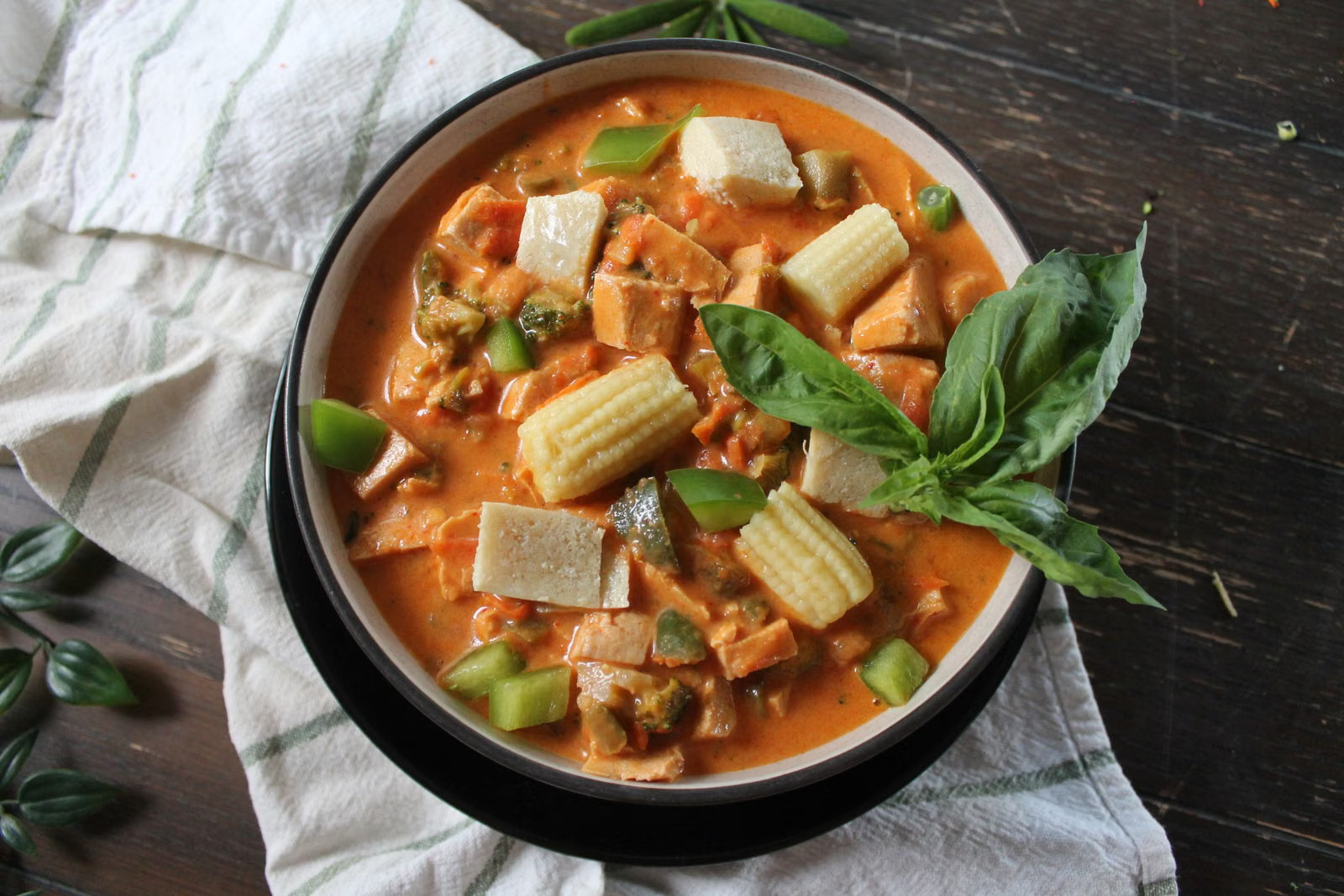
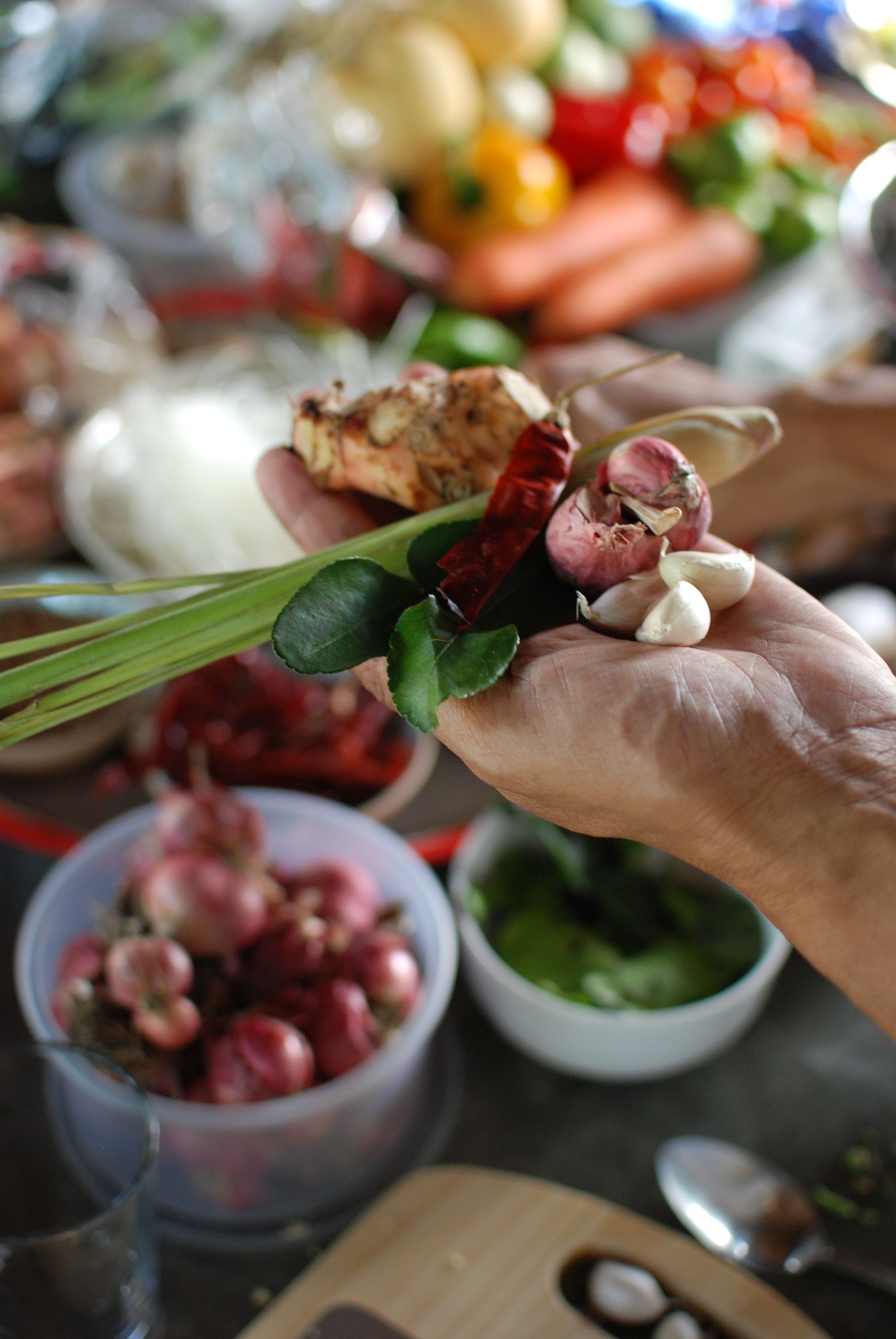
| Red | red chilli, garlic, lemongrass, galangal and spices | chicken, duck, tofu, pumpkin and bamboo shoots |
| Green | green chilli and fresh aromatic herbs | chicken, tofu, Thai aubergine and vegetables |
| Yellow | turmeric and warm spices, often round and earthy | potatoes, onions, chicken and tofu |
Red curry paste
Red paste is versatile and is often a straightforward first choice. It works with many vegetables and proteins. Its colour mainly comes from red chillies, but the colour itself does not tell you how hot the finished product will be.
Green curry paste
Green paste typically contains green chillies and fresh aromatic ingredients. It often tastes more herbal and bright. A familiar green curry combines it with coconut milk, Thai basil and vegetables such as Thai aubergine. Heat still varies widely between products.
Yellow curry paste
Yellow paste commonly includes turmeric and warm spices. It works well with potatoes and onions and often has an earthier profile. Yellow does not automatically mean mild; some products contain plenty of chilli.
How to use curry paste
- Begin with a small amount, especially with a new brand.
- Fry the paste briefly in oil or the thick part of coconut milk when the recipe and product directions call for it.
- Add coconut milk and the remaining ingredients.
- Adjust salt, fish sauce, sugar or lime only after the curry has developed.
- Do not taste the paste raw when the package requires cooking.
Vegetarian or vegan?
Thai curry paste may contain shrimp paste, fish products or other animal ingredients. A vegetable picture on the front is not proof. Look for clear vegetarian or vegan labelling and verify the ingredient and allergen information.
A beginner’s choice
Choose by recipe, ingredients and your own heat tolerance—not colour alone. A small packet or tin is often a better first test than a large tub.
Related guides
Continue with: Coconut milk, coconut cream or coconut drink: what does your recipe need?, Jasmine rice, sushi rice or glutinous rice: which one fits your dish?, Firm, soft or silken tofu: which one fits your dish?.