Tteok (떡) names a family of Korean rice cakes rather than one product. Shape, rice type and preparation affect whether a piece stays chewy in sauce, softens in soup or belongs on a dessert plate. Shop for the dish you plan to make before choosing a brand.
Four useful varieties
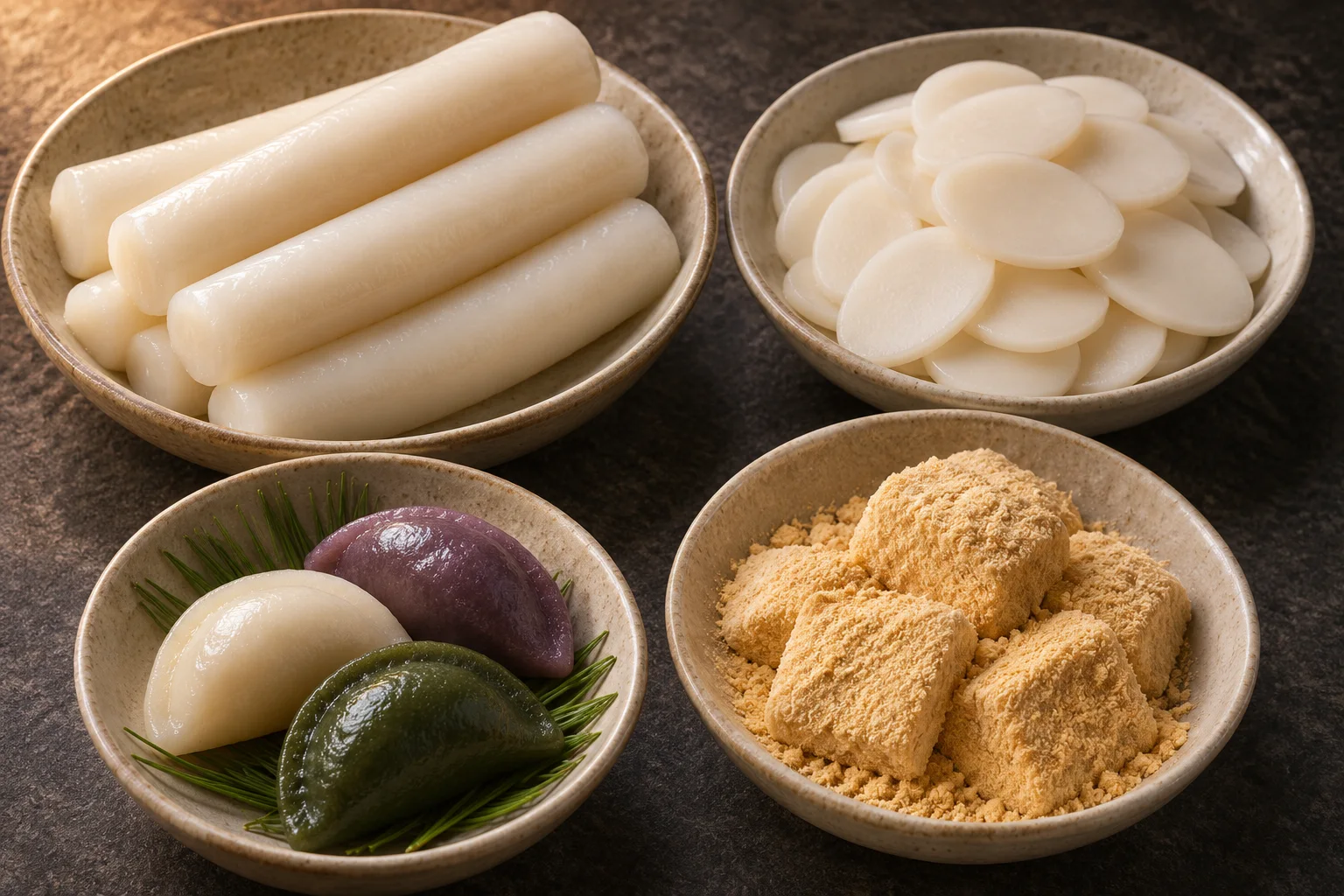
| Type | Shape and texture | Best use |
|---|---|---|
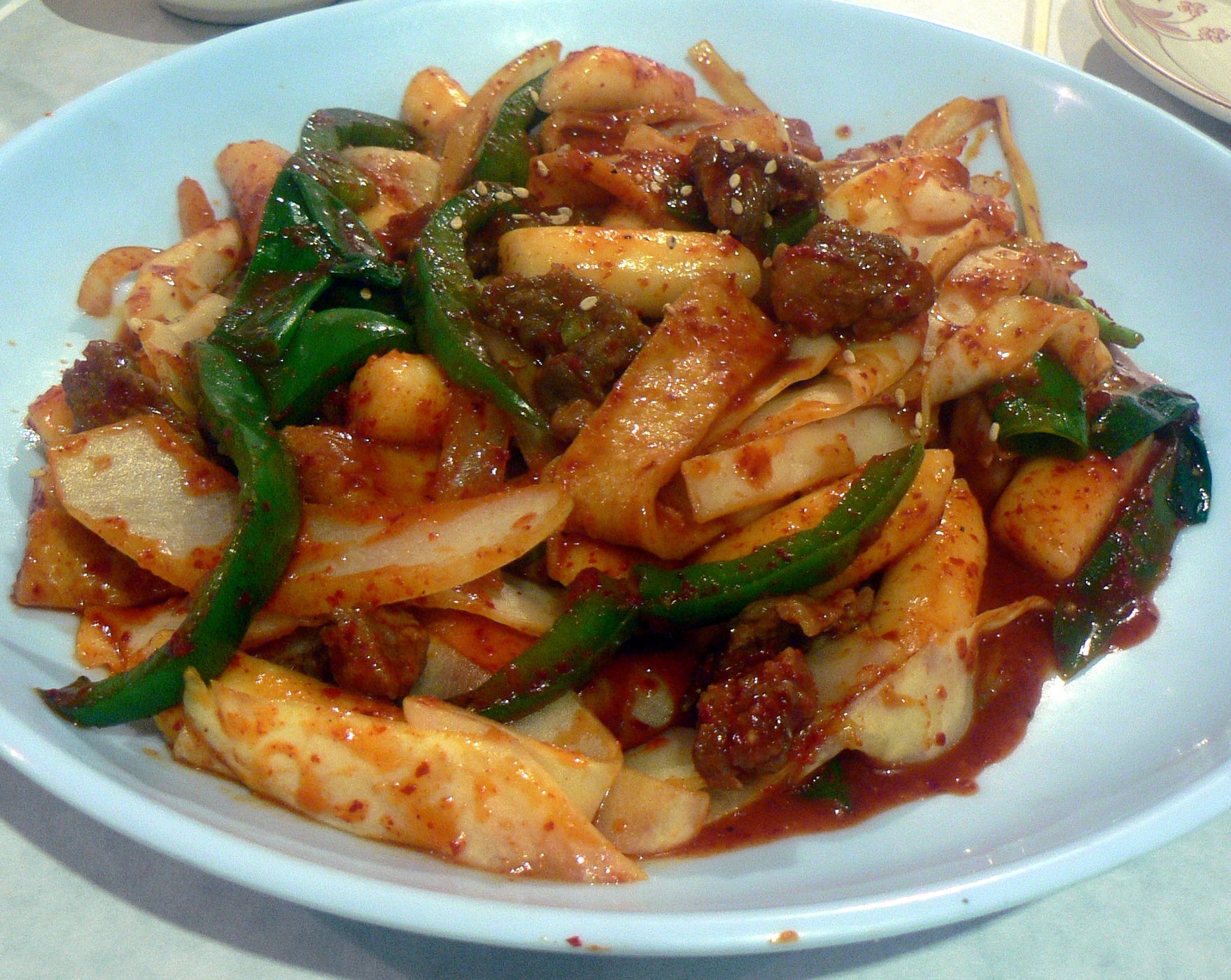
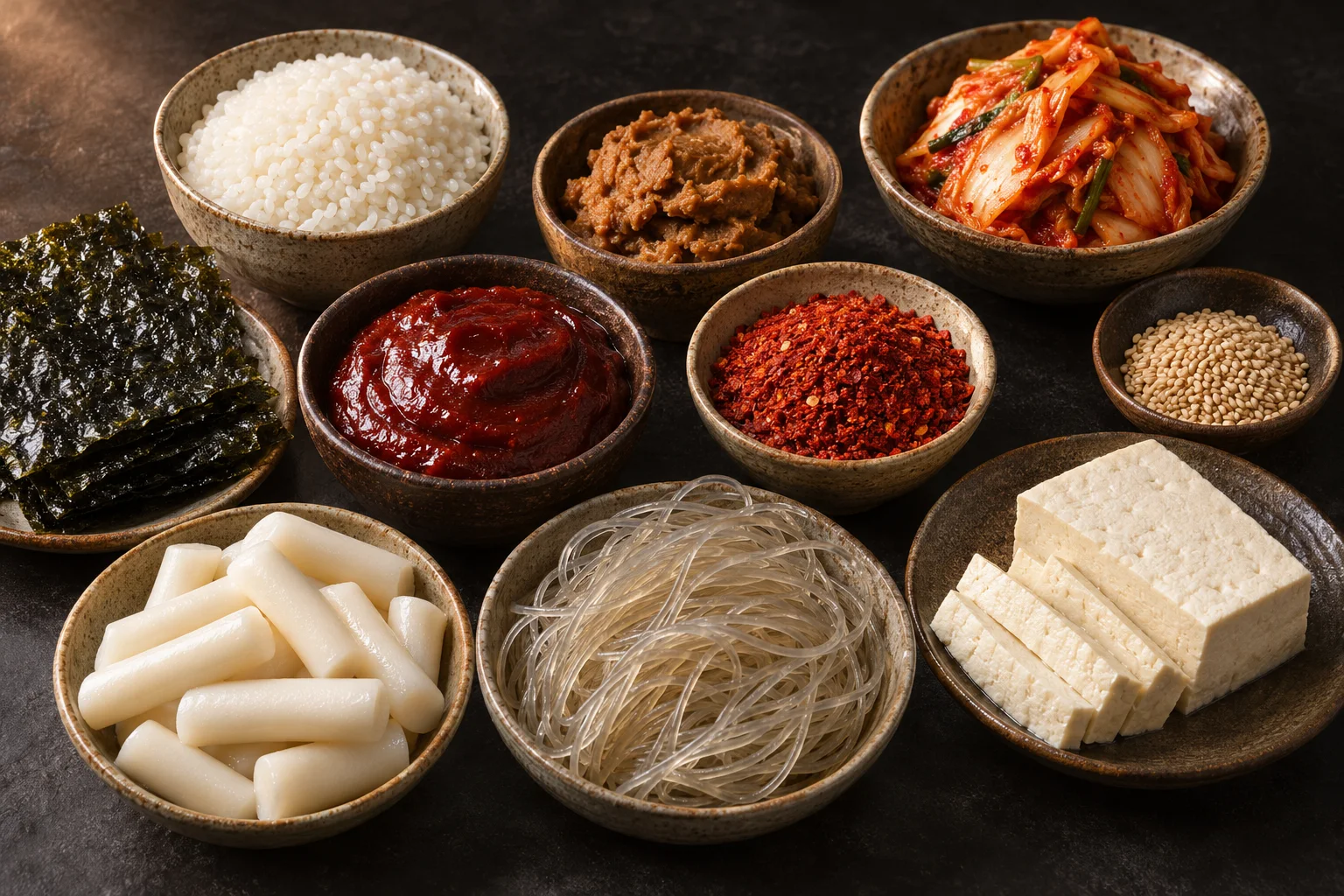
| Garaetteok / tteokbokki tteok (가래떡 / 떡볶이 떡) | White cylinders, pleasantly chewy | Tteokbokki, rabokki |
| Tteokguk tteok (떡국 떡) | Thin oval slices, quick to cook | Rice-cake soup |
| Songpyeon (송편) | Small filled half-moons | Sweet snack |
| Injeolmi (인절미) | Soft sticky-rice pieces, often dusted with bean powder | Dessert |
For two tteokbokki portions, about 300 g cylindrical tteok is a practical amount; use 200–250 g oval slices for two soup portions. Cooking time depends on thickness, freshness and the pack.
Fresh, chilled and frozen
Fresh tteok firms up quickly. Chilled and frozen packs are easier to keep but must follow label storage instructions. Separate stuck pieces gently. Soak or thaw hard frozen cakes only if the pack calls for it; different types behave differently. Simmer until heated through and springy. Cool cooked leftovers promptly, refrigerate and eat soon. A splash of water helps when reheating.
Buying and serving safely
Look for 떡볶이 떡 for sauce and 떡국 떡 for soup. Check rice type, allergens, dates and chilling instructions; sweet versions may contain nuts or soy. Sticky rice cakes can pose a choking risk to young children and people with swallowing difficulties. Supervise and serve suitably small pieces. You can ask Asia Markt Thien Tam in Ingolstadt about the form you need through a non-binding pickup enquiry; the shop confirms stock.
The shop will confirm availability of individual ingredients.