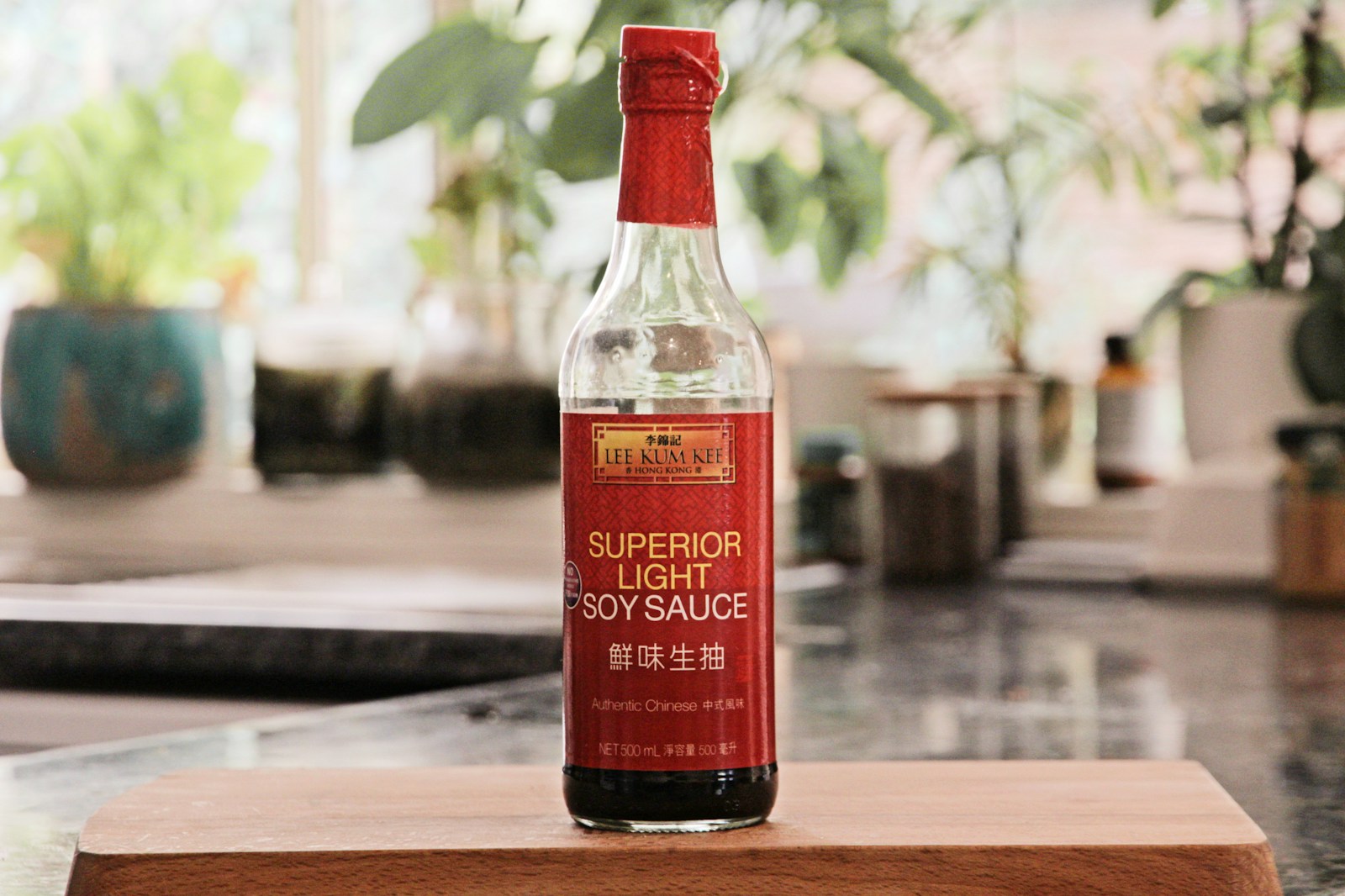
What is it?
Oyster sauce is a dark seasoning used especially in Chinese, Thai and Vietnamese cooking. It adds saltiness and umami and its thicker texture coats vegetables, noodles and meat. Formulas vary considerably, so the product name alone does not establish the amount of oyster or the full allergen profile.
Taste and use
Savoury, salty, rich in umami and often slightly sweet; its thick texture clings to ingredients and gives sauces a glossy finish.
Best uses
- Seasoning stir-fried vegetables and noodles
- Marinating meat or tofu
- Adding body and gloss to sauces
- Rounding out rice and vegetable dishes
How to recognise it on the shelf
- German and English labels may say “Austernsauce”, “Oyster Sauce” or “Oyster-Flavoured Sauce”; Chinese packs may show 蚝油 or 蠔油.
- Check whether the product contains oyster extract or is a vegetarian mushroom stir-fry sauce. “Oyster-flavoured” is not one standard formula.
- A product is vegan or gluten-free only when the exact pack clearly says so; vegetarian mushroom sauce may still contain soy or wheat.
- Colour and thickness alone are not reliable quality tests. The ingredients, salt, sugar and intended use are more informative.
Product types and forms
Sauce containing oyster extract
Classic versions contain oyster ingredients and provide savoury, gently marine depth. Oyster content, salt, sugar and thickness vary.
Oyster-flavoured sauce
This wording covers different formulas. Only the ingredient list shows the oyster ingredients and allergens in that particular bottle.
Vegetarian mushroom stir-fry sauce
A functional mushroom- or soy-based alternative that can provide umami, body and gloss without oyster.
Specifically gluten-free or vegan products
These properties cannot be inferred from the category; they require clear wording on the exact package.
Shopping advice
- Choose a small bottle if you are testing the sauce in only one or two stir-fries.
- Buy for the recipes you plan to cook and compare salt, sugar, ingredients and thickness because brands taste and measure differently.
- For vegetarian or vegan cooking, look explicitly for a mushroom sauce without oyster and for a separate vegan statement.
- Anyone with allergies must read the current pack; formulas may contain soy, wheat or additional allergens.
Substitutions
Vegetarian mushroom stir-fry sauce
Function replaced: In many wok dishes it can replace thickness, saltiness, umami and part of the glossy coating.
What changes: The oyster character is absent and sweetness and salt can differ, so taste rather than applying a universal 1:1 swap.
Dietary note: It may suit vegetarian or vegan cooking when the package is labelled accordingly.
Allergens: It may still contain soy, wheat or other allergens and is not automatically gluten-free.
Soy sauce with a little sweetness
Function replaced: It can supply salty, umami-rich basic seasoning when a thick glaze is not essential.
What changes: It is thinner and does not recreate the same glaze or mollusc flavour.
Dietary note: Only an appropriately labelled soy sauce meets a specific dietary requirement.
Allergens: Soy and, depending on the type, wheat or gluten must be checked.
Vegetarian, vegan and allergen information
Classic oyster sauce is not vegetarian or vegan because it contains oyster ingredients. Vegetarian mushroom stir-fry sauce is the closest functional alternative for many dishes, but vegan and gluten-free status each require explicit labelling.
Storage
Store unopened and opened products according to the manufacturer's instructions. Keep the bottle clean and tightly closed. Refrigeration or a specific after-opening period should be followed only when stated on the exact package.